Bree Street Lounger
Where: Bree Street, Cape Town, South Africa
Timeframe: November – December 2025 (design and build)
Collaborators: Roland Postma, Young Urbanists South Africa, Open Bree, Street Experiments Africa, City of Cape Town.
Materials: SA pine, stainless steel fasteners, custom upholstery, perforated fabric canopy, pneumatic castor wheels.
A design-build experiment in temporary street shade
Our work often begins with simple questions about how people inhabit space. Through small, built interventions we explore how temporary structures, material choices, and environmental conditions can shape the atmosphere of public life. The Bree Street Lounger emerged from one such question: how a small piece of street furniture might create comfort and gathering in the middle of a busy city street.
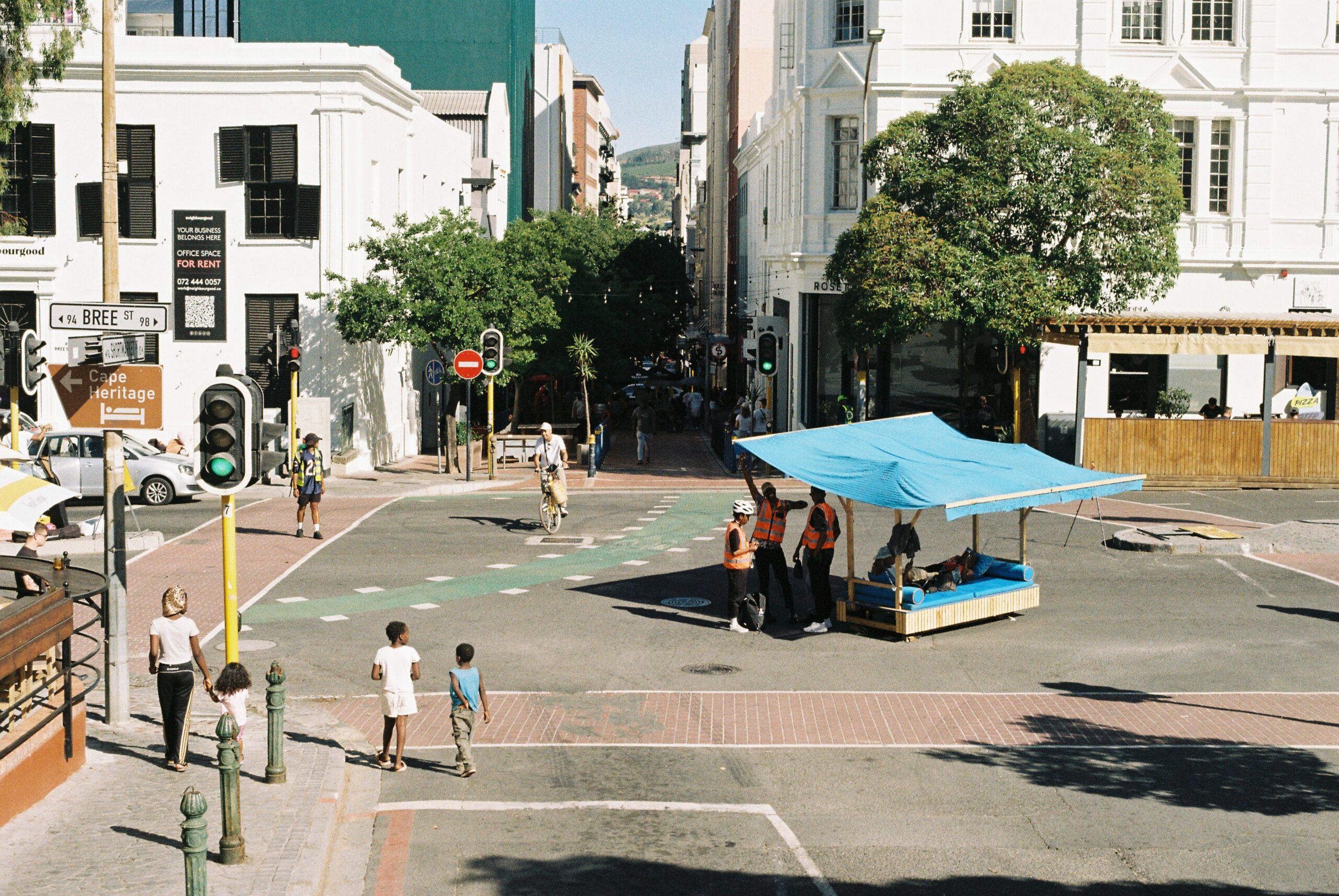
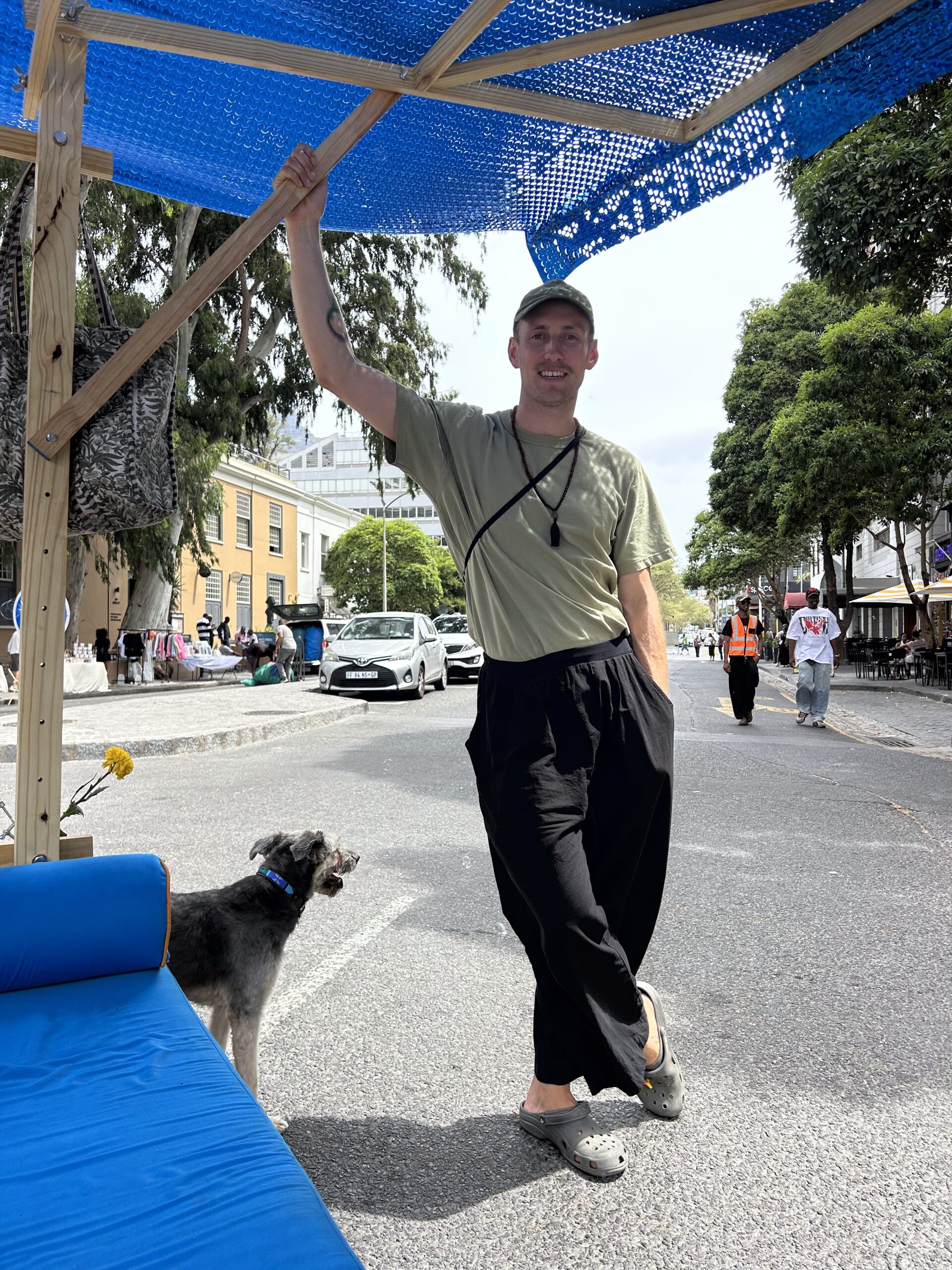
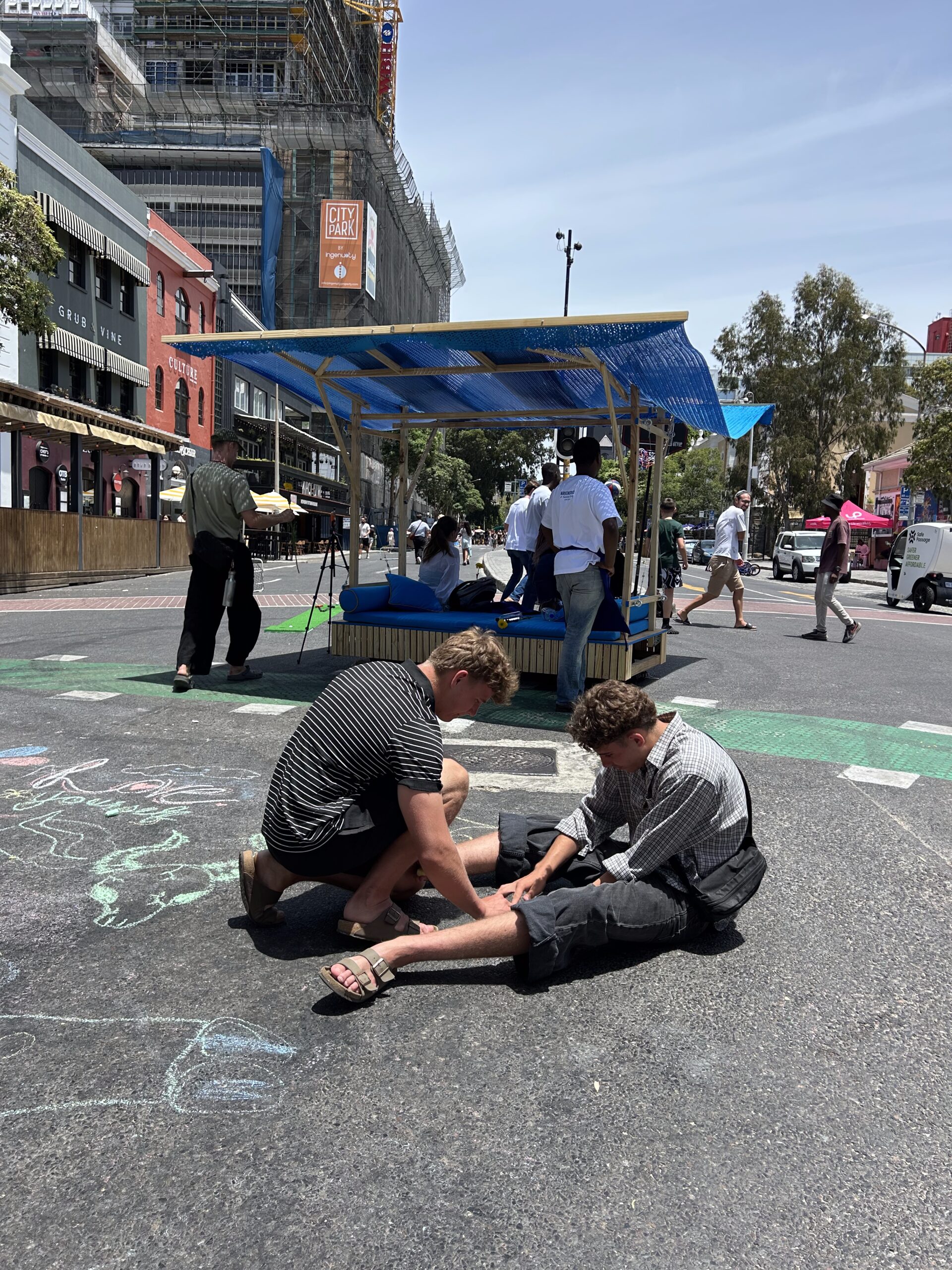
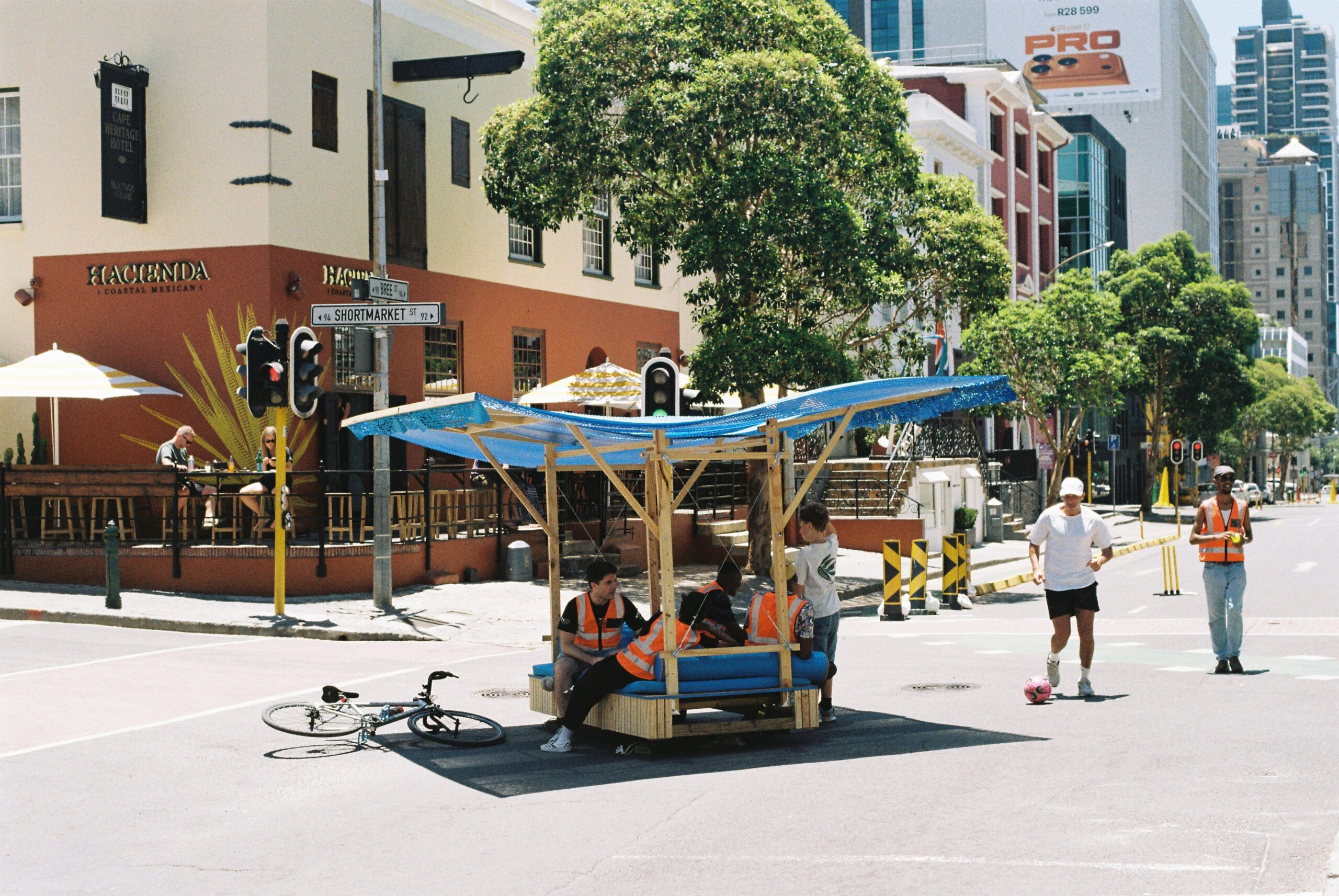
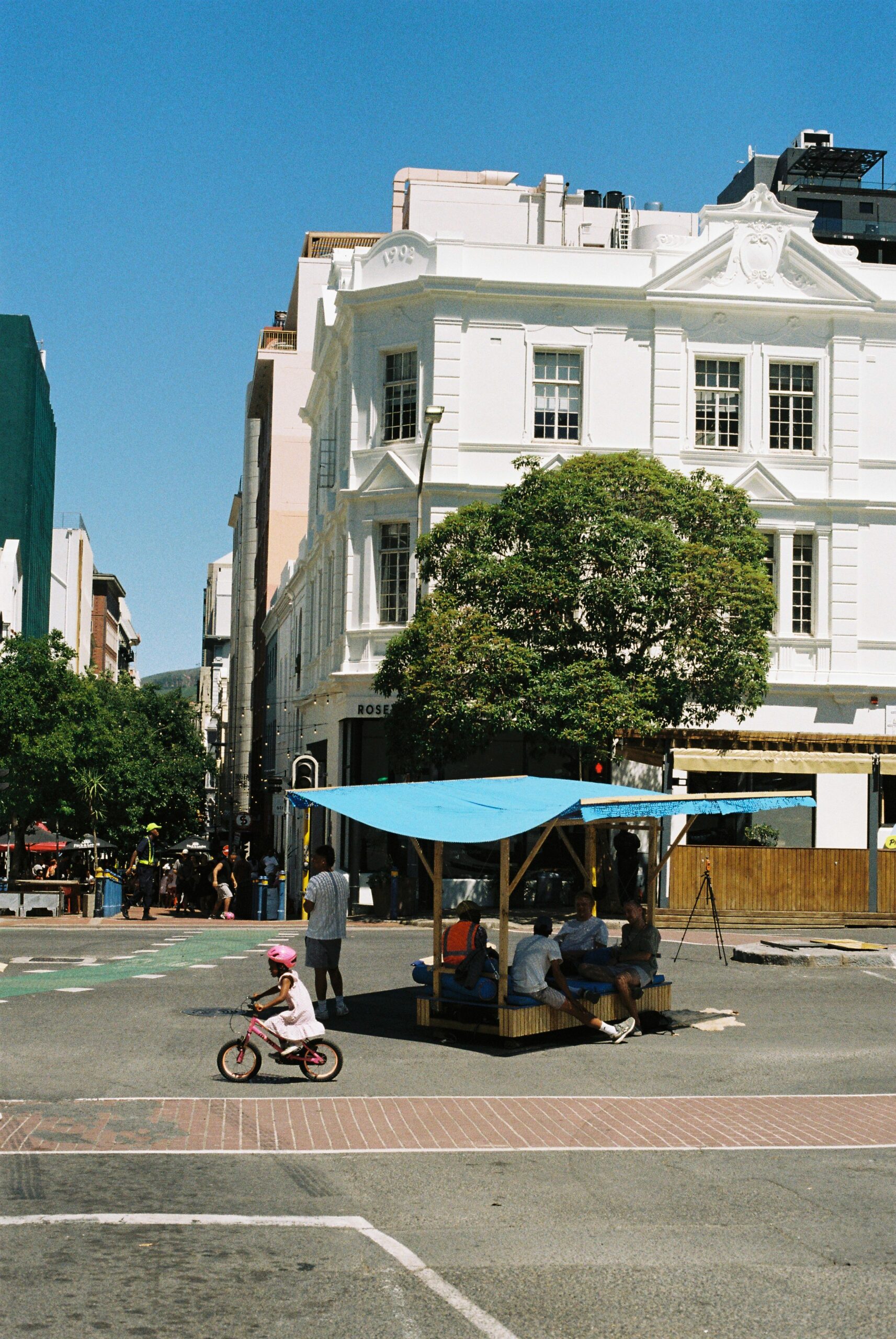
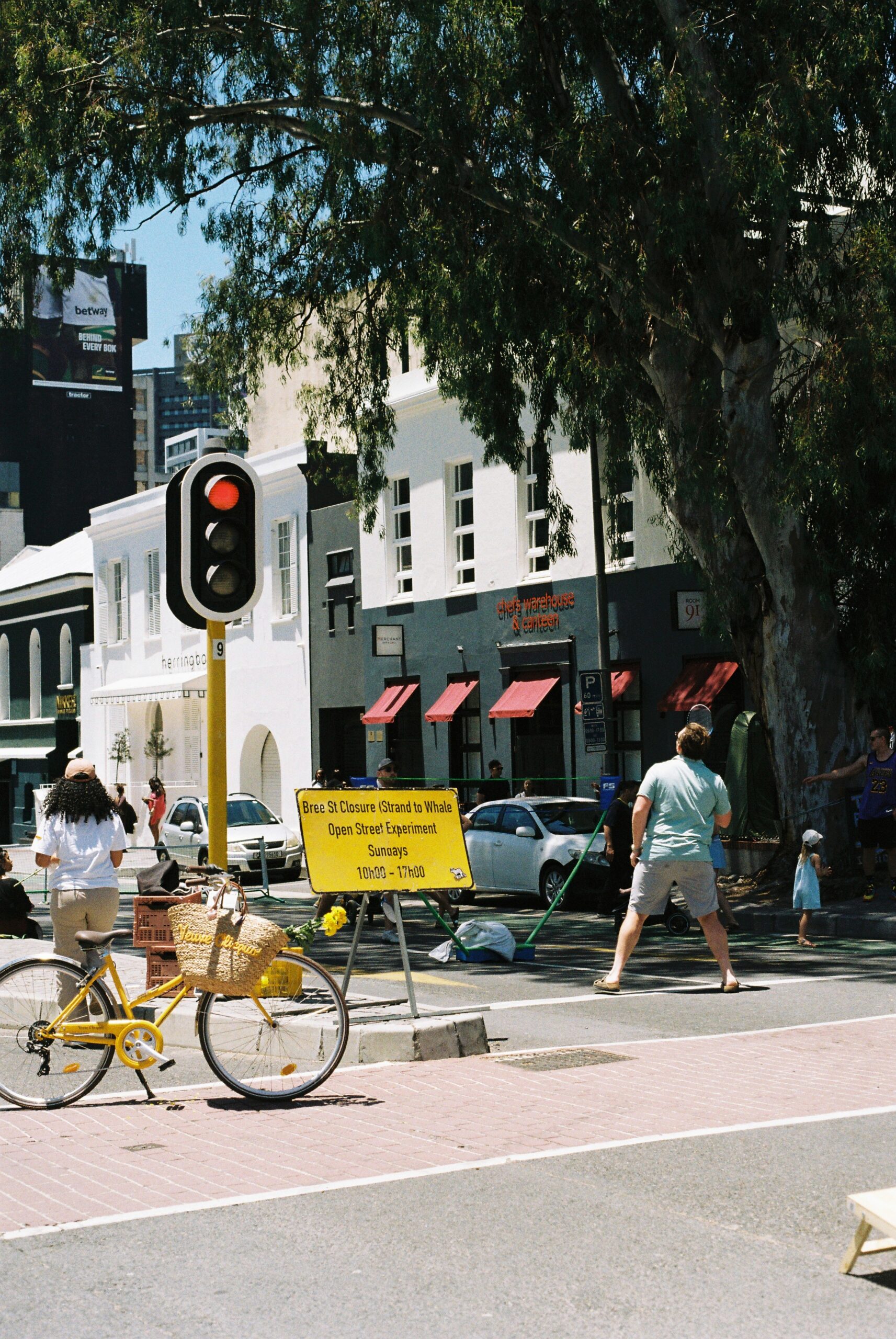
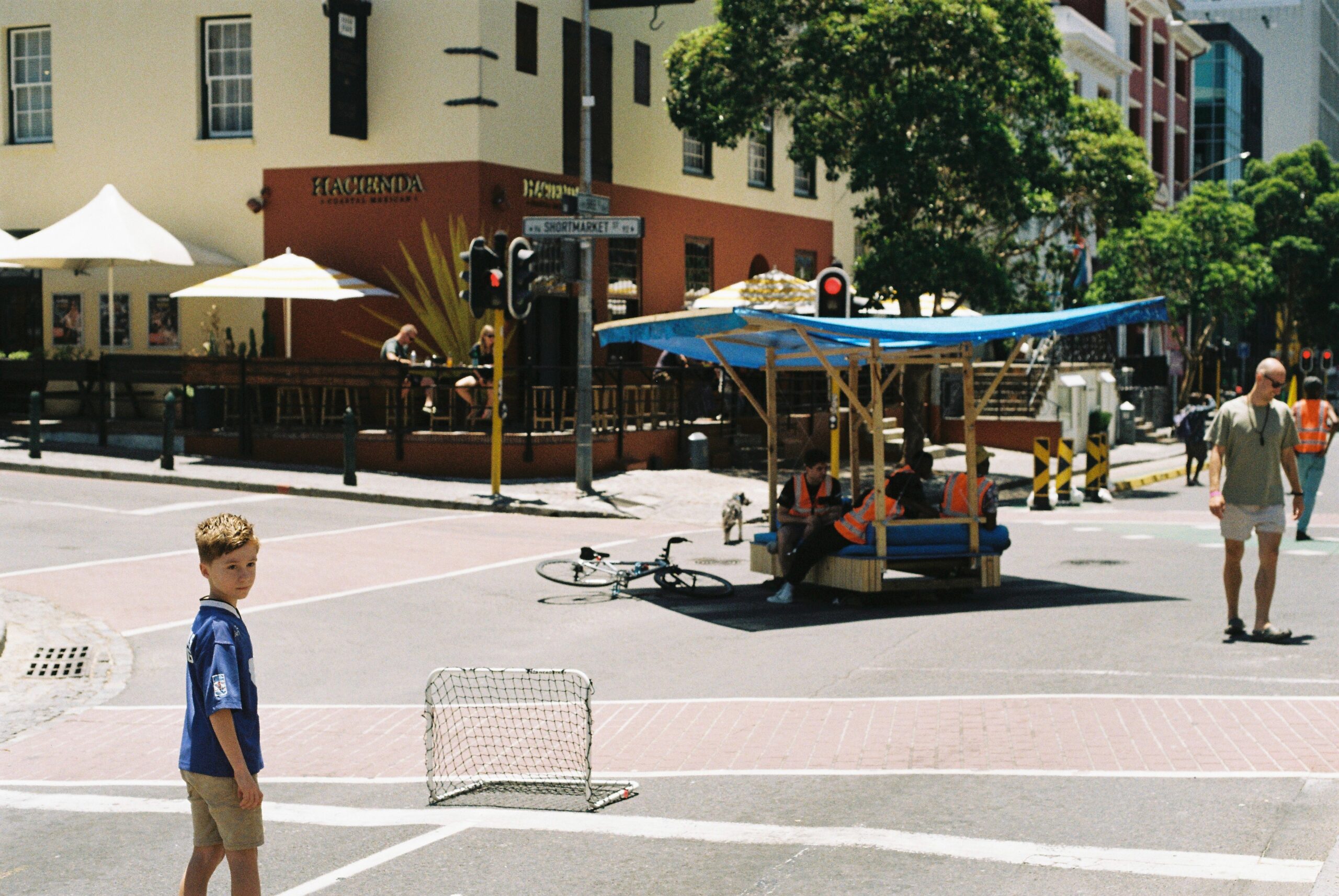
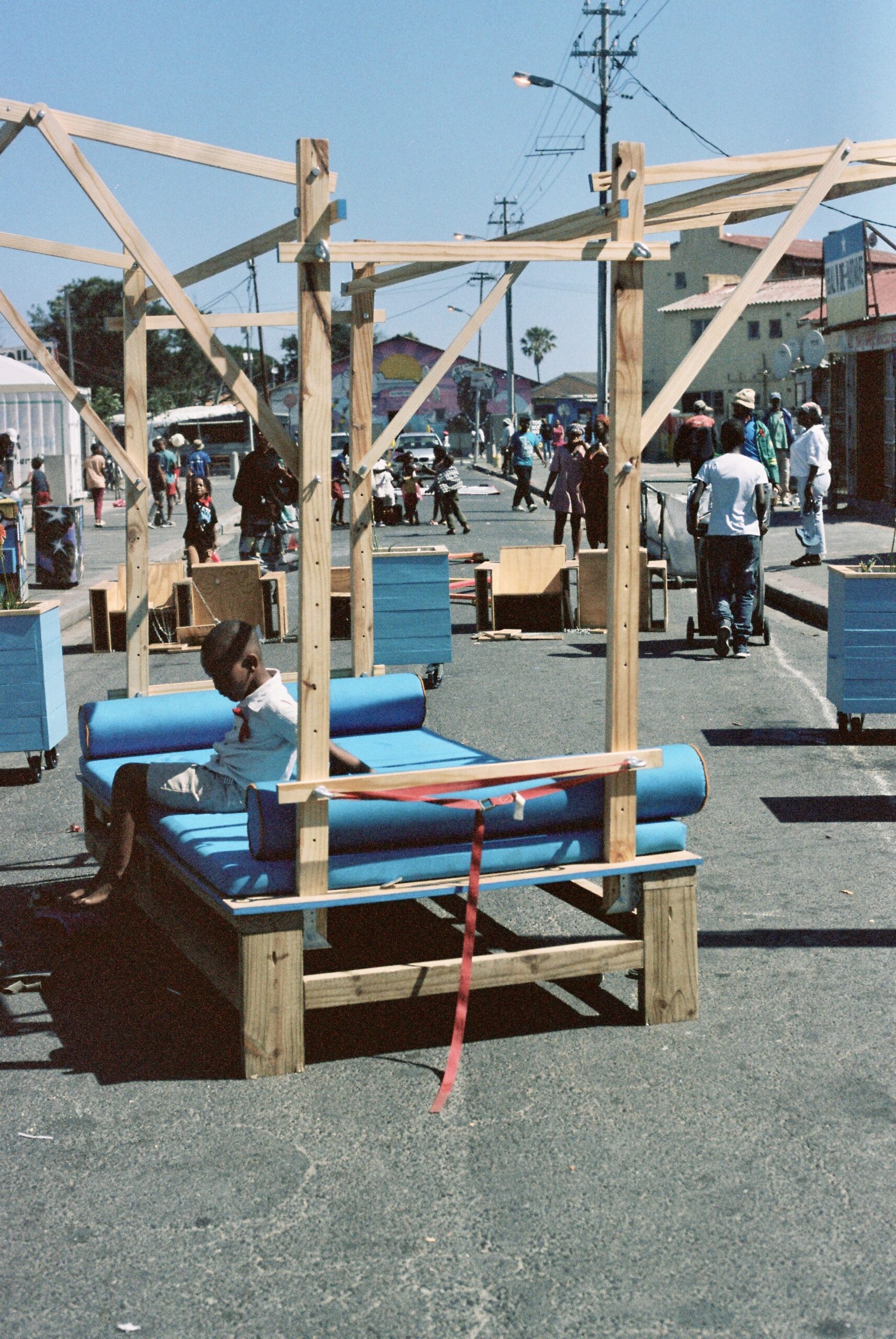
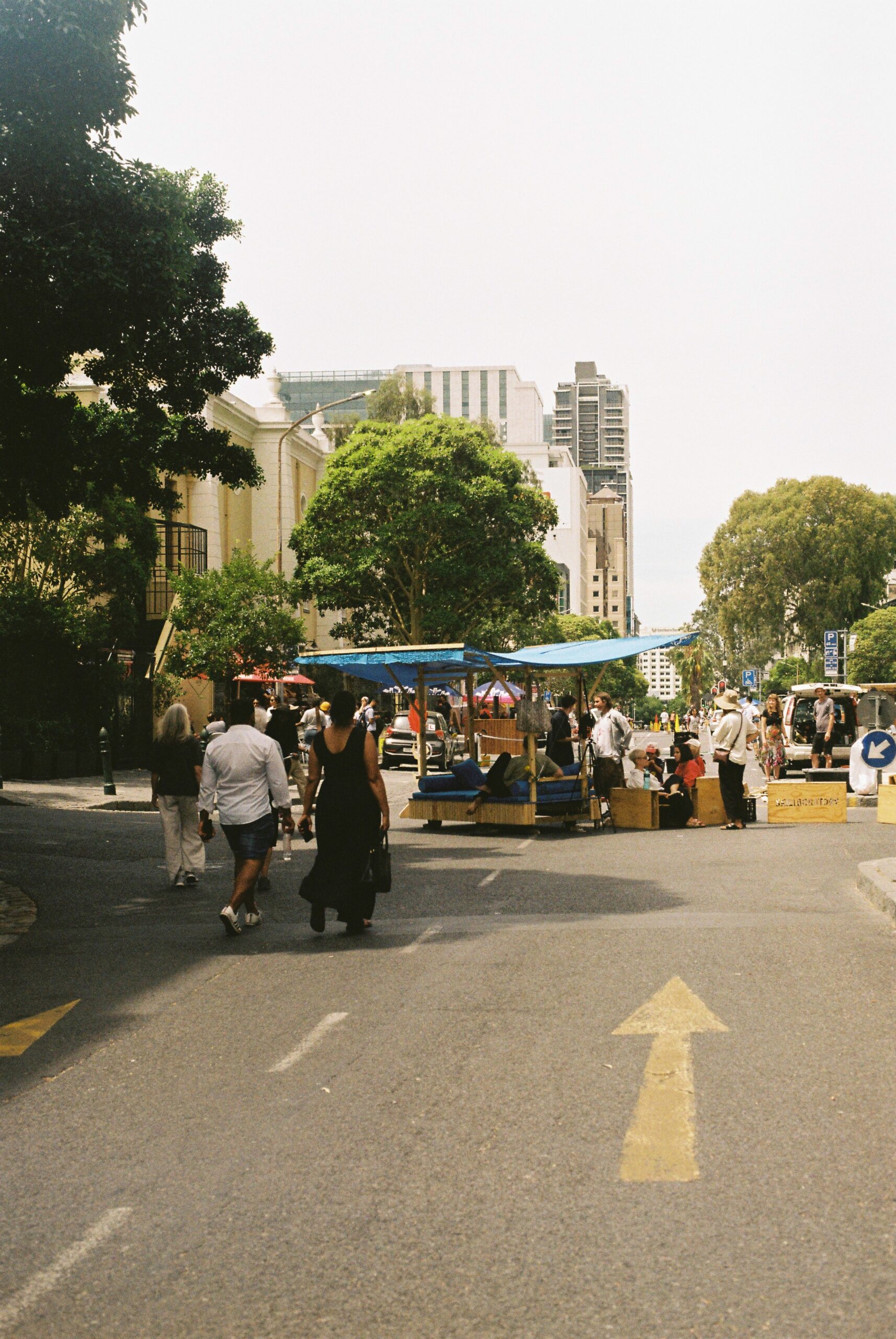
The Bree Street Lounger is a mobile shade structure designed for Open Bree, a recurring open-street event in Cape Town. Built as a six-person rolling lounger with foldable canopy wings, the structure creates a shaded place to sit and gather within the otherwise hard, exposed environment of the street.
Mounted on large castor wheels, the lounger can be moved through the street and positioned wherever there are people. When opened, its canopy spans roughly four metres, creating a temporary island of shade and soft seating within the urban landscape.
Constructed primarily from locally sourced off-the-shelf materials, the project was developed and built over several weeks as our first large-scale design-build. The structure was conceived not only as an object of street furniture, but as an experiment in how small interventions can momentarily transform the atmosphere of public space.
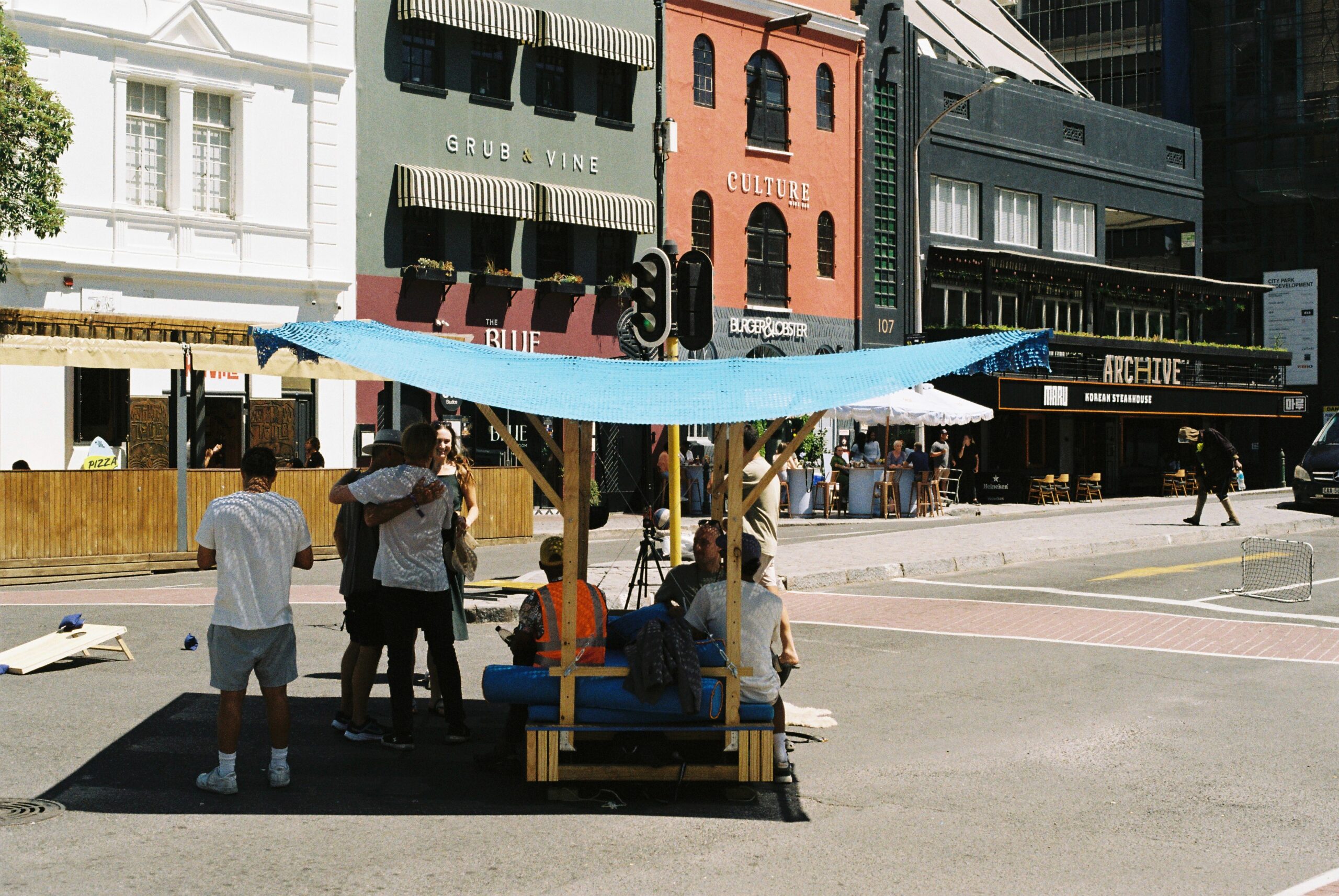
a soft place in the middle of the street
The project began earlier in the year in a far more improvised form. One Sunday in early January 2025, we were walking down Bree Street when we ran into Roland, founder of Young Urbanists and the driving force behind Open Bree. The conversation quickly turned to the street itself.
“We really need shade,” he said.
Margaux replied, “You should meet Lukas.”
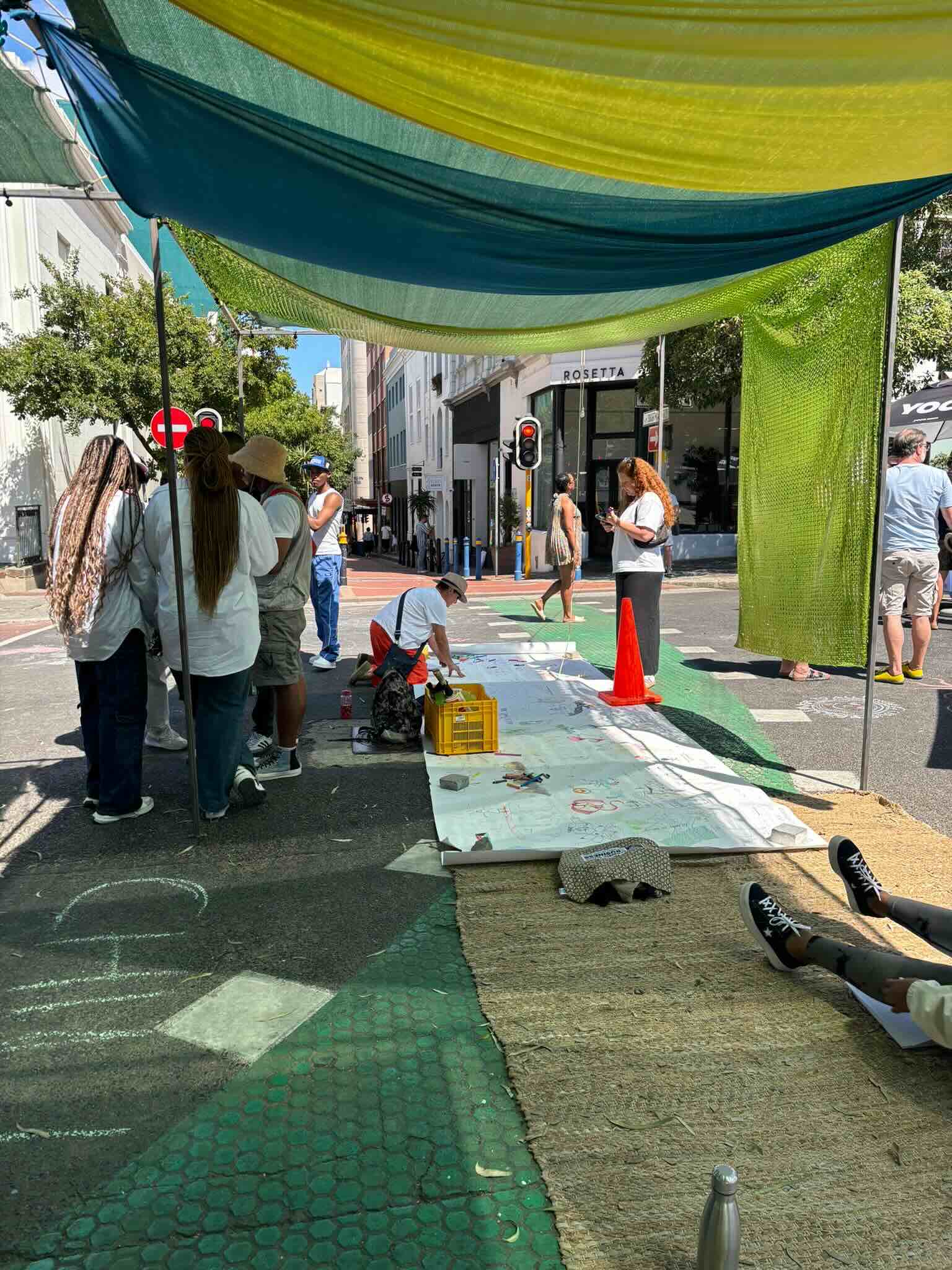
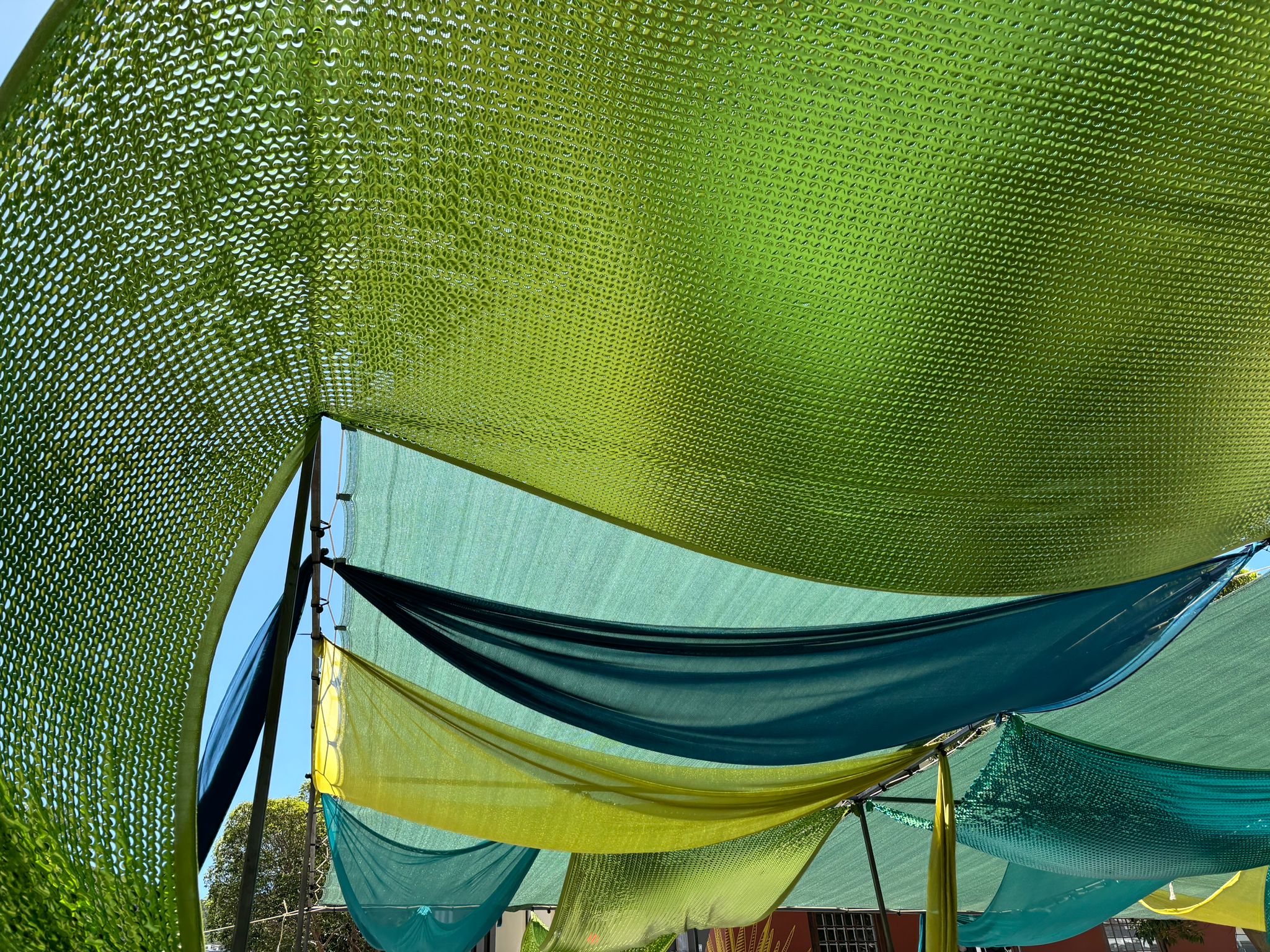
A week later we brought a temporary shade structure to the event. At the time we had been dating for only two weeks, and it became the first thing we built together. Originally designed for Afrikaburn, the structure was adapted for the street with carpets and fabric that softened its otherwise utilitarian frame.
By the end of the day a small gathering had formed beneath it: music playing, people drawing their visions for the street, and the improvised structure becoming a temporary meeting place.
It created atmosphere, but it was heavy, difficult to assemble, and poorly suited to an event that appears and disappears every week. The experience revealed the need for something simpler, more robust, and easier to deploy.
The challenge was easy to describe, but surprisingly difficult to solve:
How do you create shade and comfort in the middle of a street, without building anything permanent?
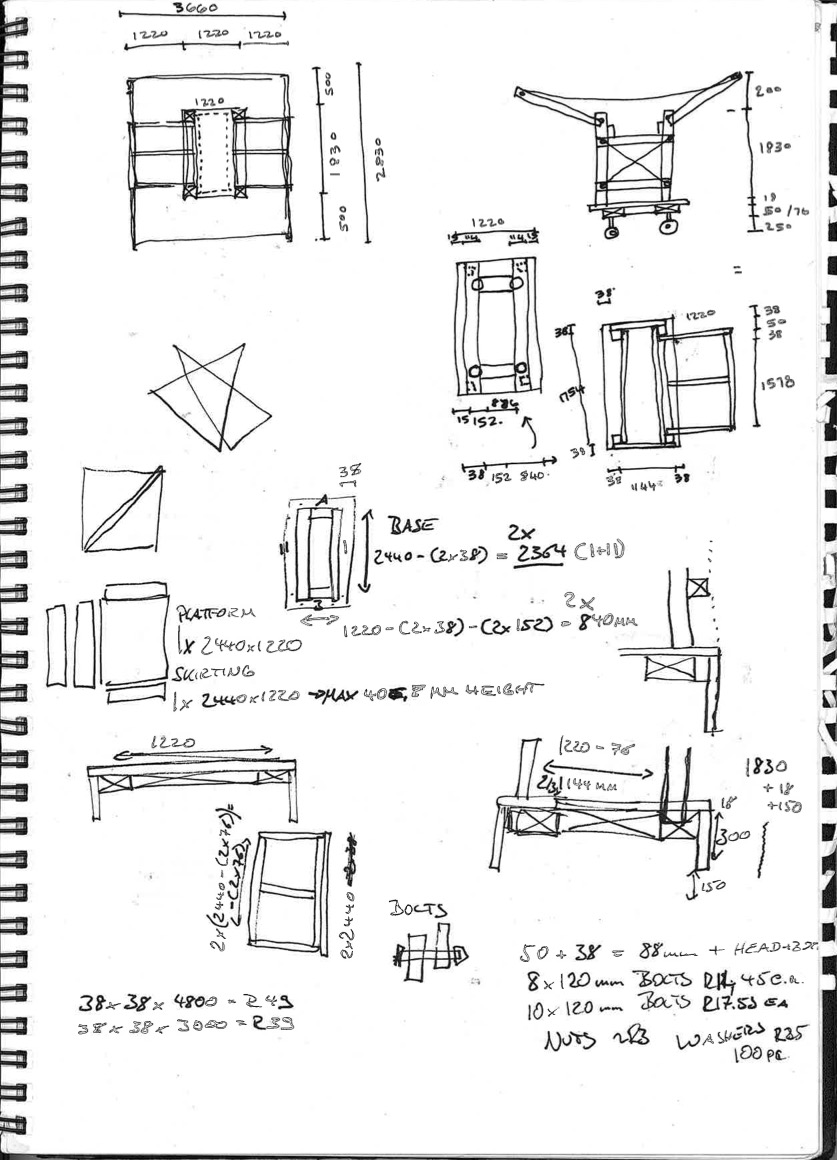
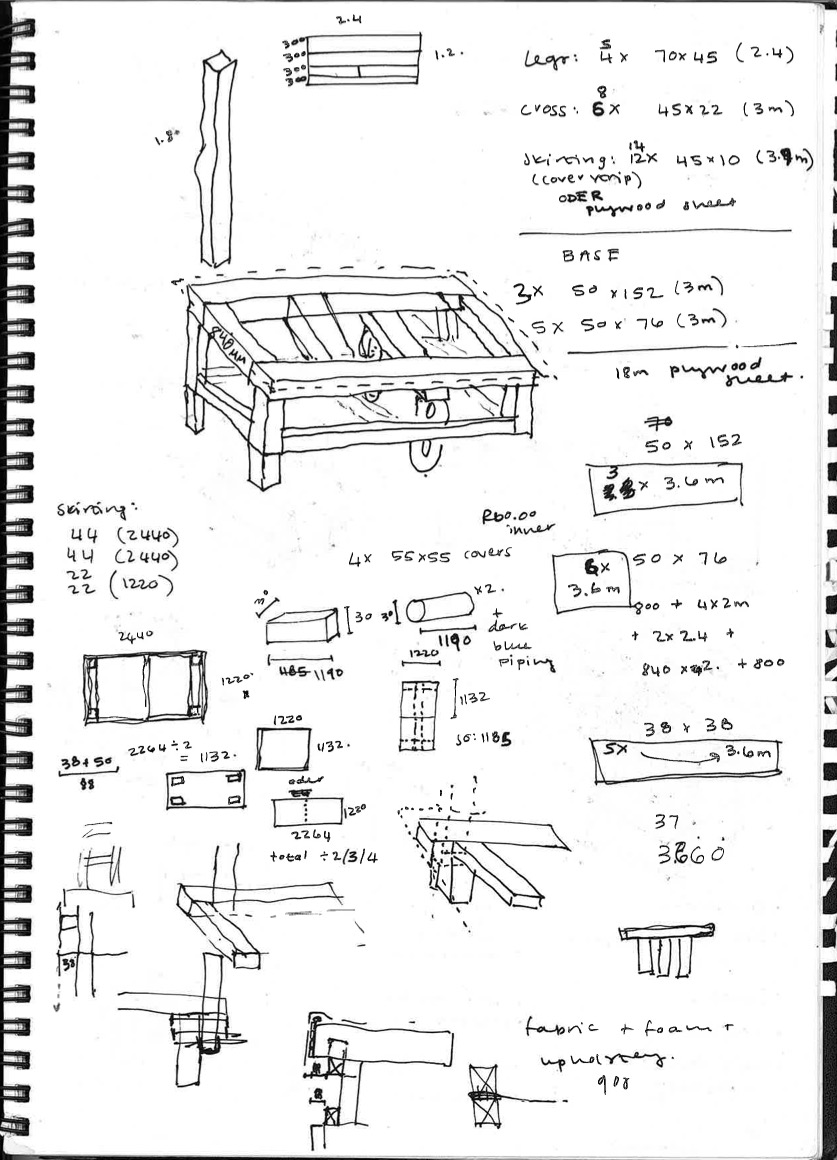
design process
Toward the end of the year Roland reached out again, interested in bringing a new structure to the street. The brief remained open, and the project began as a series of design explorations rather than a clearly defined object.
The design developed through a process of iteration and discussion. A set of mobile shade structures encountered at the 2025 Architecture Biennale in Venice became an important reference point, helping shape the direction of the final design.
The process reinforced something central to our approach: design rarely begins from nothing. It evolves through observing, documenting, and reinterpreting existing ideas. The Bree Street Lounger grew out of this iterative process, where several possibilities were explored before one was ultimately realised.
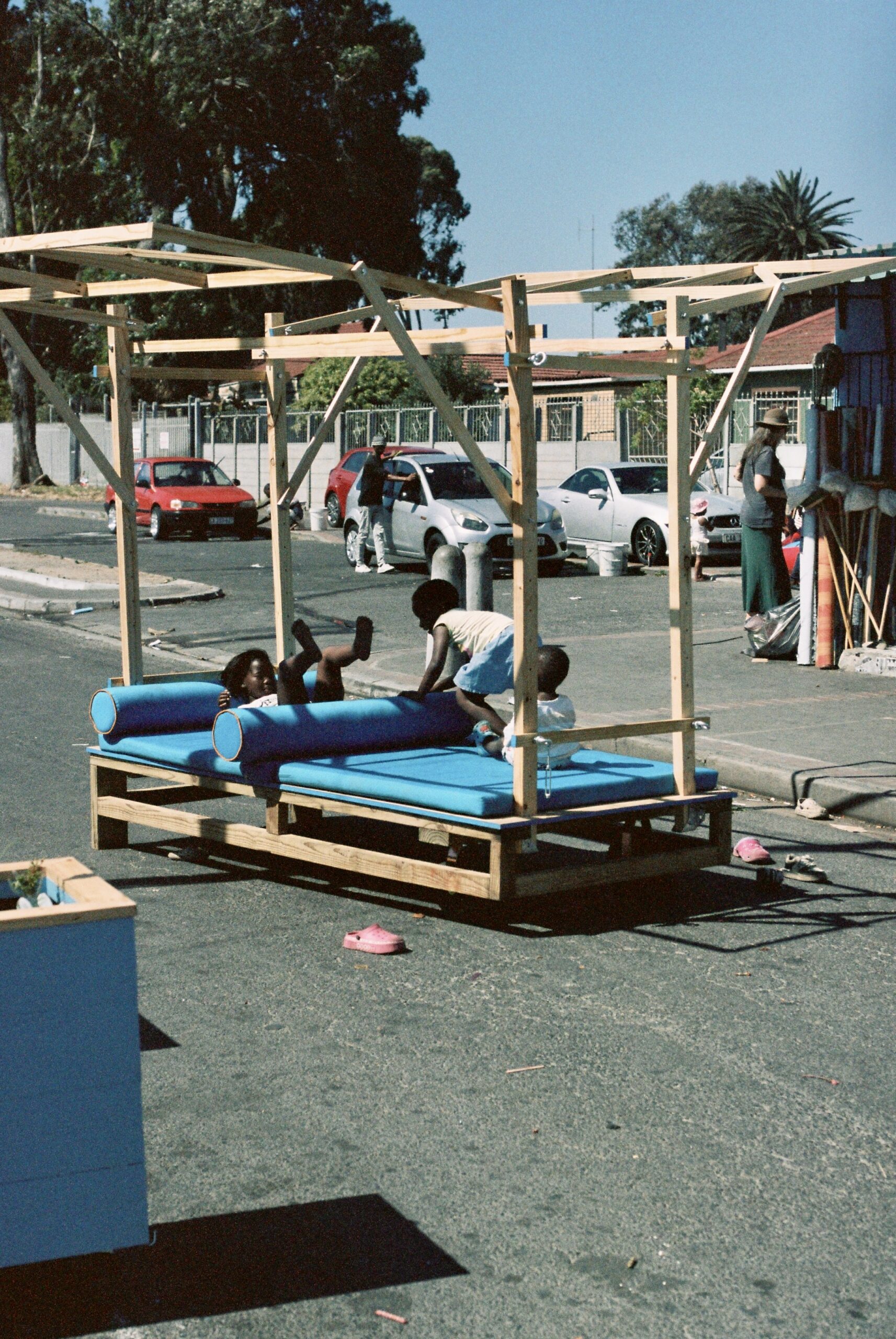
Before the structure was complete, we took it for its maiden voyage to Langa for a sister project of Open Bree. Even without the canopy installed, the lounger proved unexpectedly successful. It offered a soft place within a hard environment, and the children of the neighbourhood quickly claimed it as their own, transforming it into a playground.
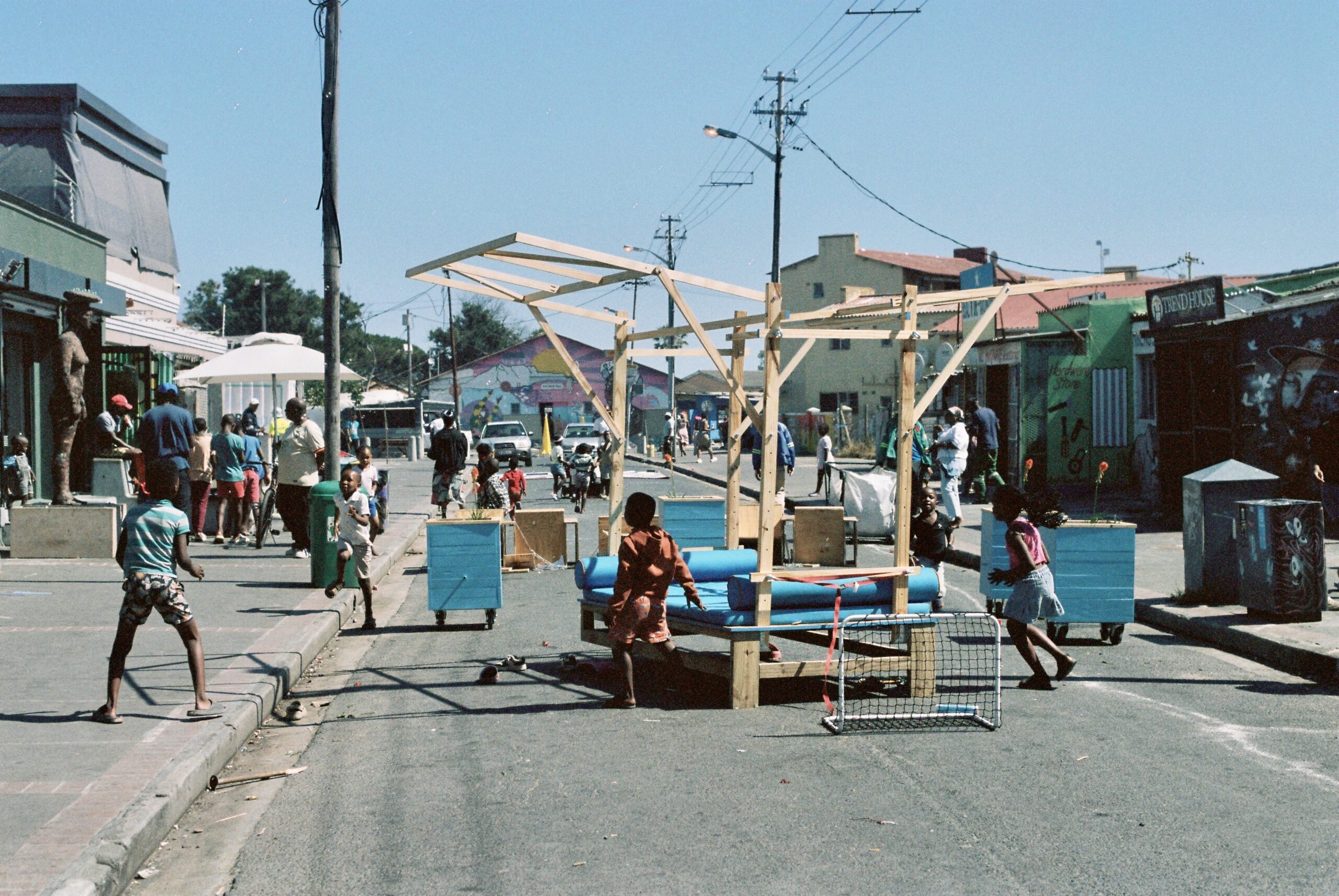
a lounger, on wheels!
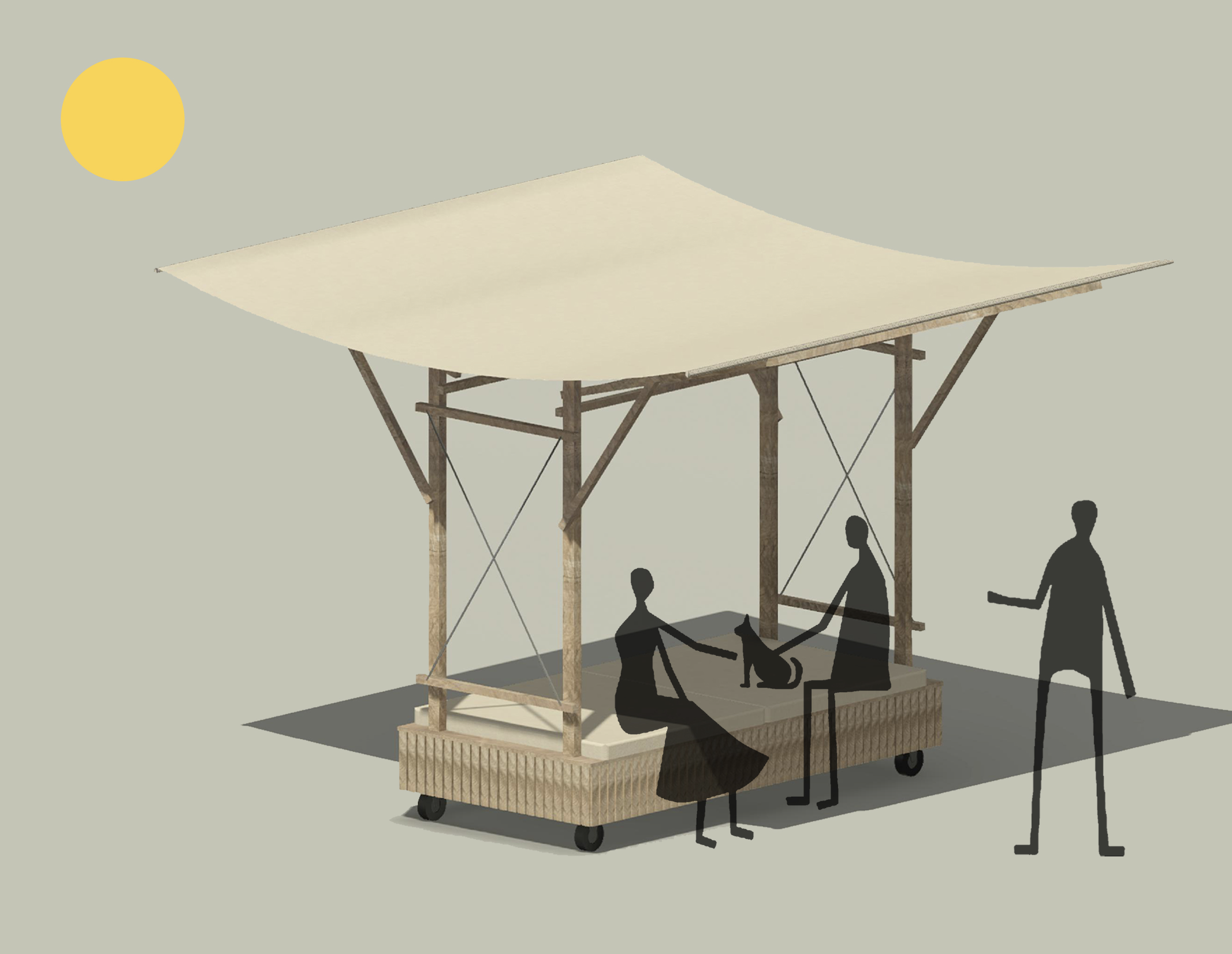
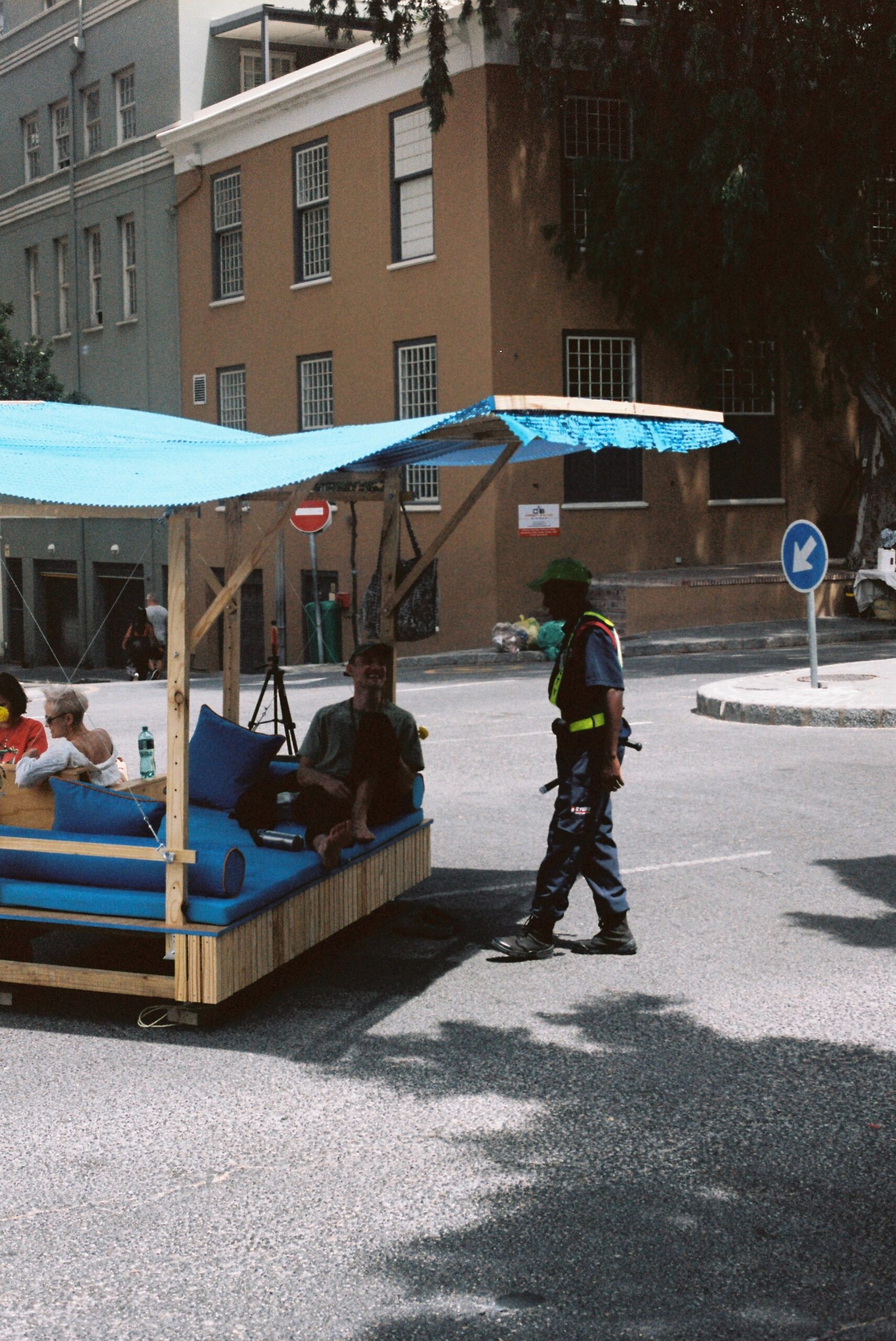
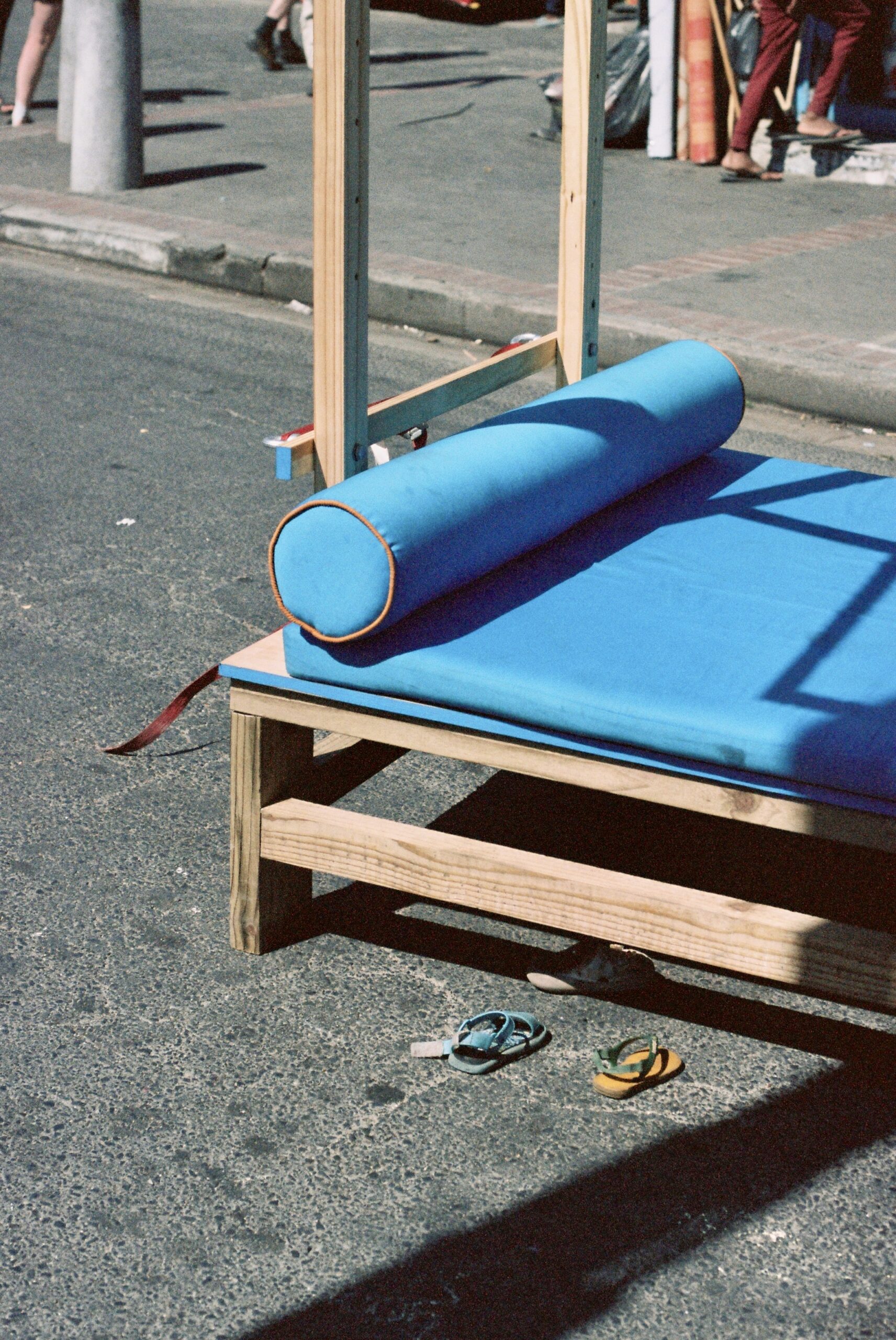
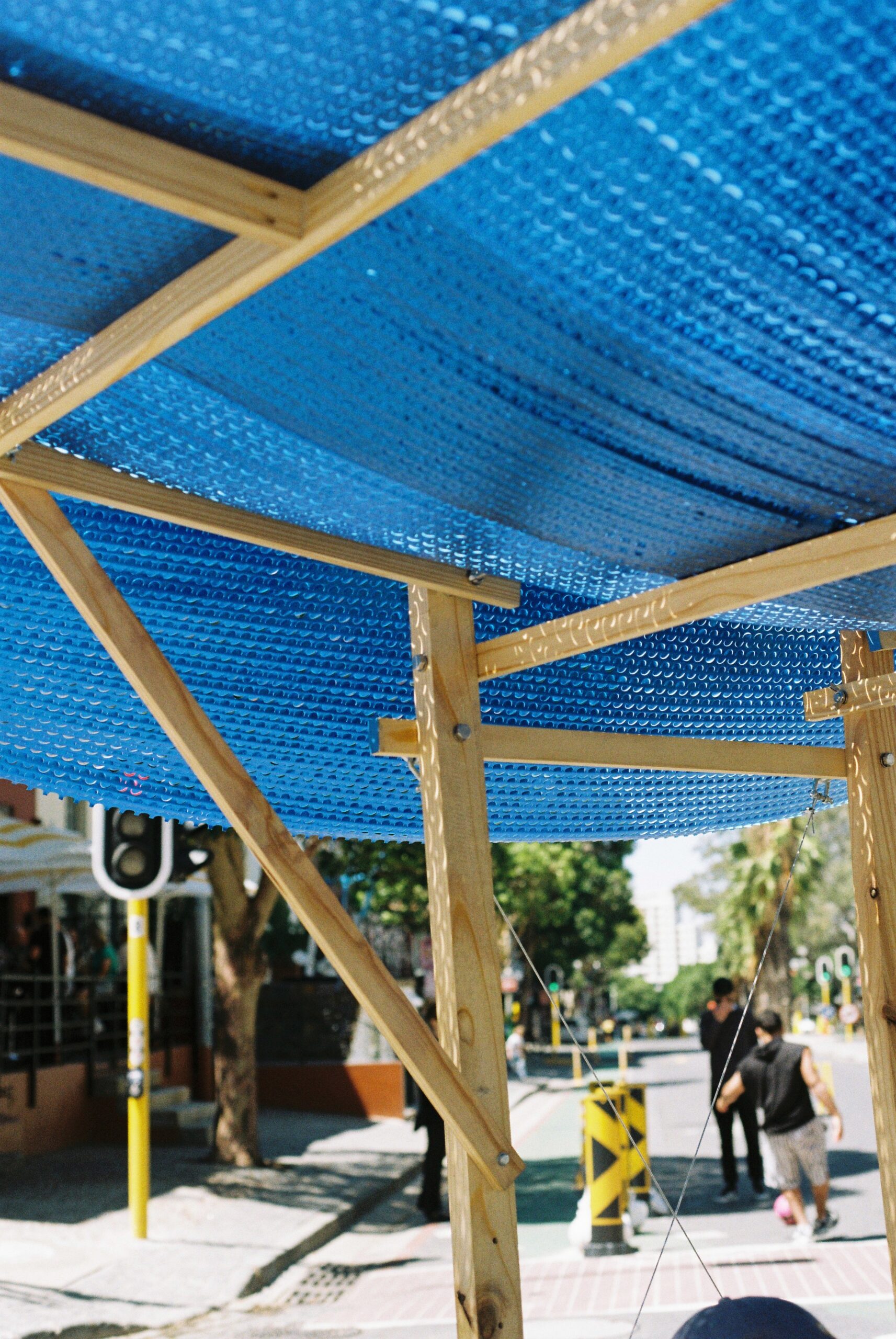
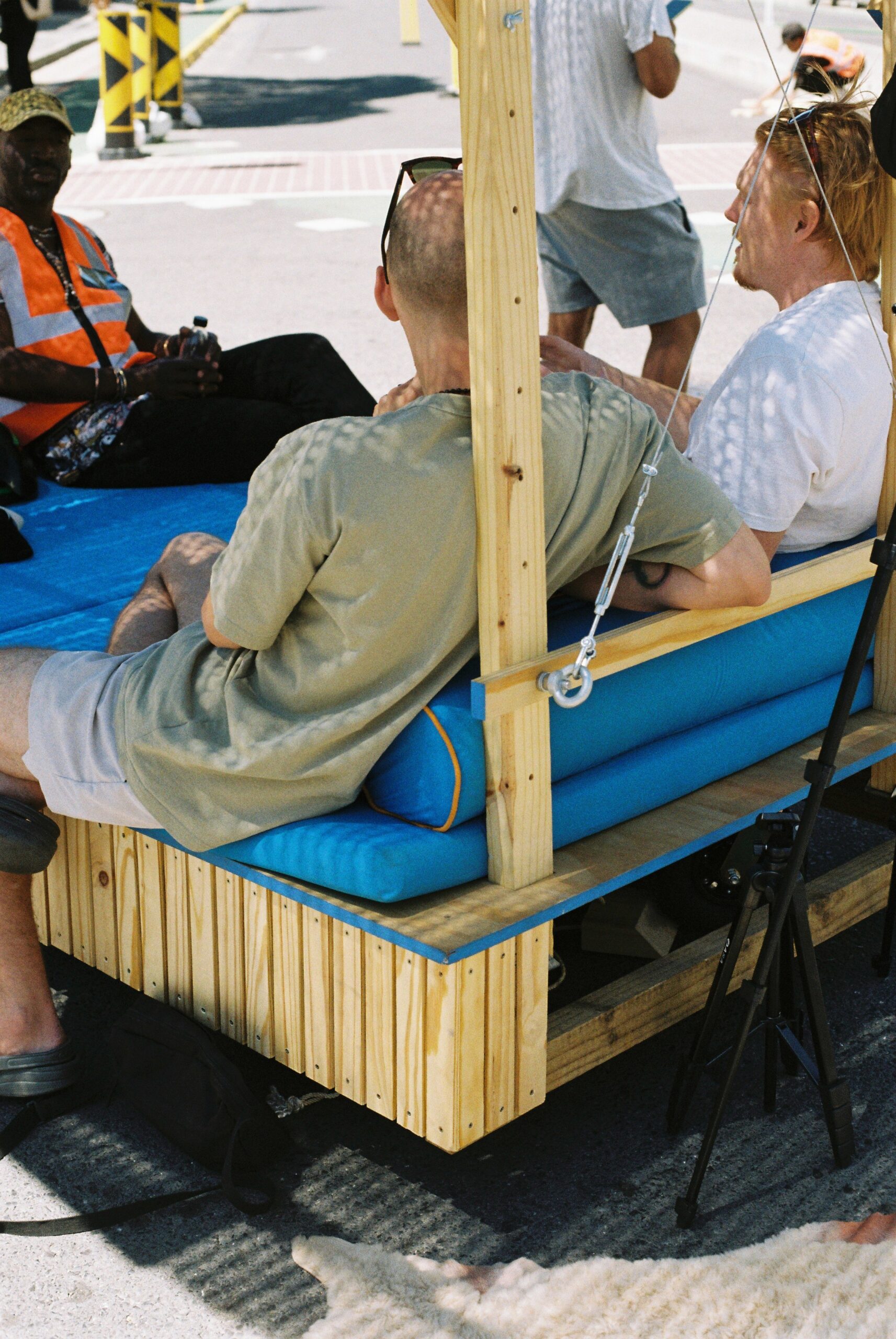
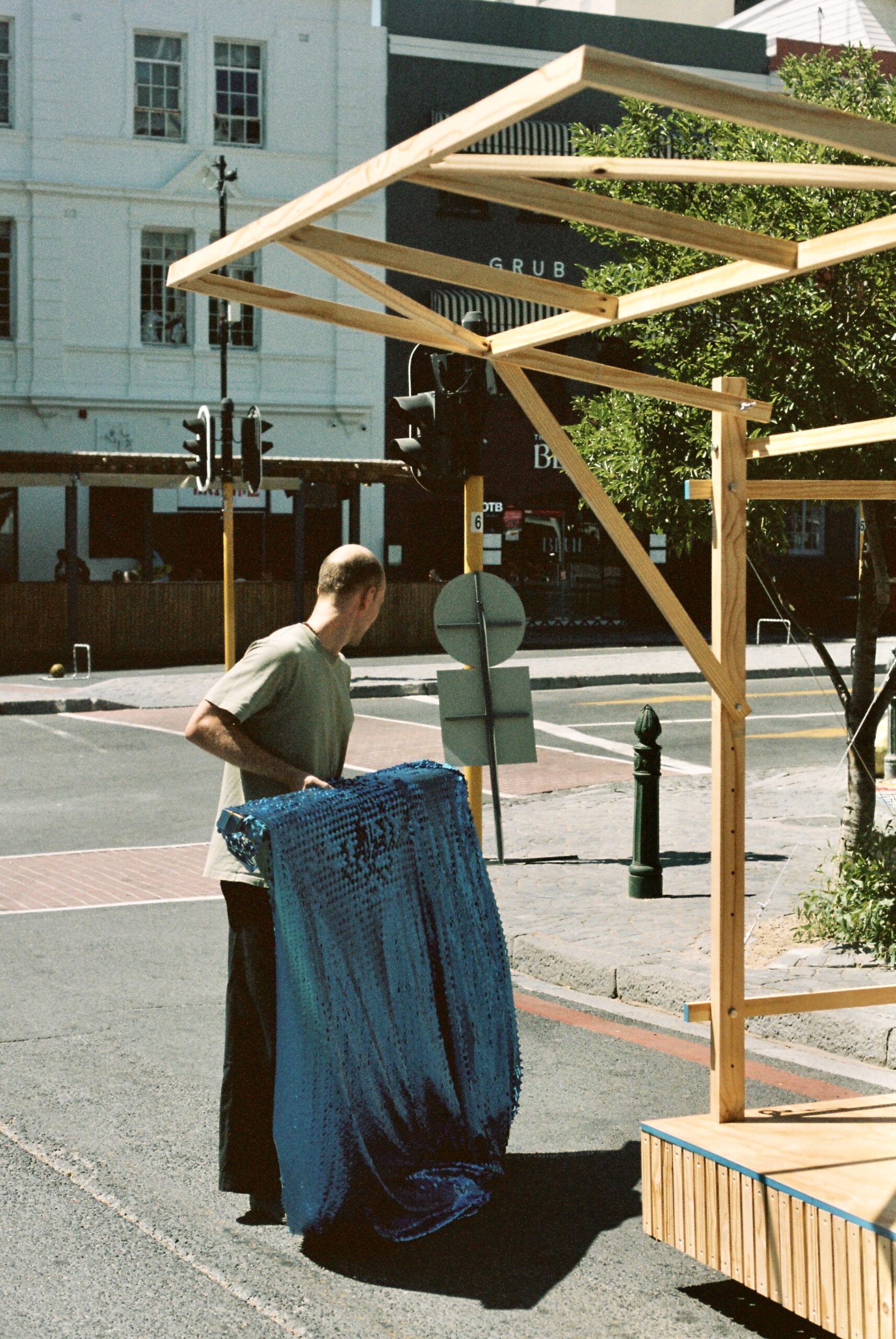
The final piece takes the form of a six-person lounger mounted on large pneumatic wheels, with foldable canopy wings that extend outward to create a shaded area roughly four by four metres in size.
Upholstered cushions soften the timber structure, transforming it from a purely functional object into a place to rest and gather. Positioned within the street, the lounger acts as a small, temporary refuge from the surrounding asphalt and activity.
Although built as a single object, the structure was designed so that its components could be disassembled and reconfigured. The original intention was to produce several units over time, gradually populating the street with multiple shaded islands. In practice, the complexity of the build and the realities of time and funding meant that only one unit was completed.
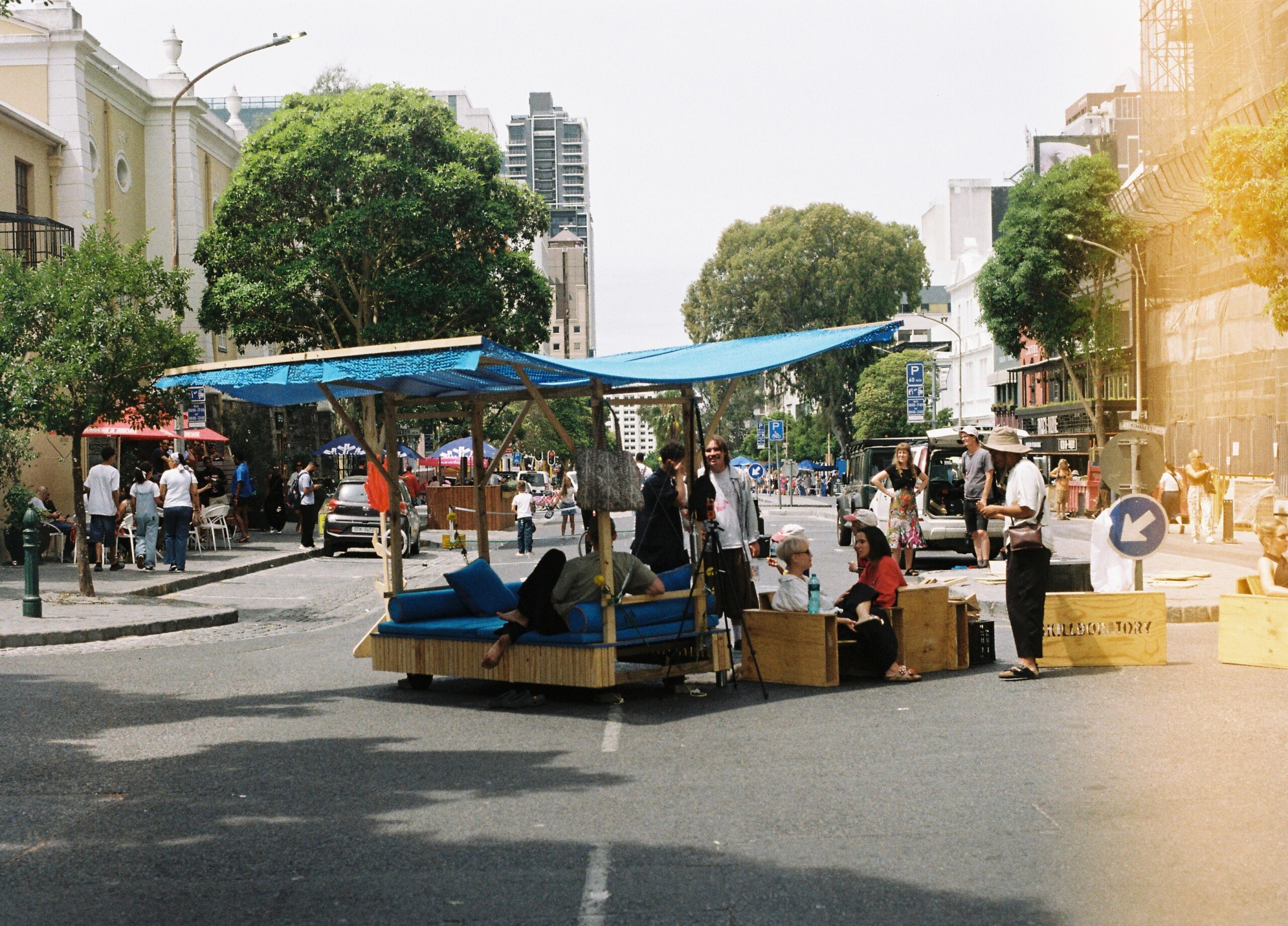
materials & making
The lounger was constructed primarily from locally sourced, off-the-shelf materials chosen for accessibility and ease of replication.
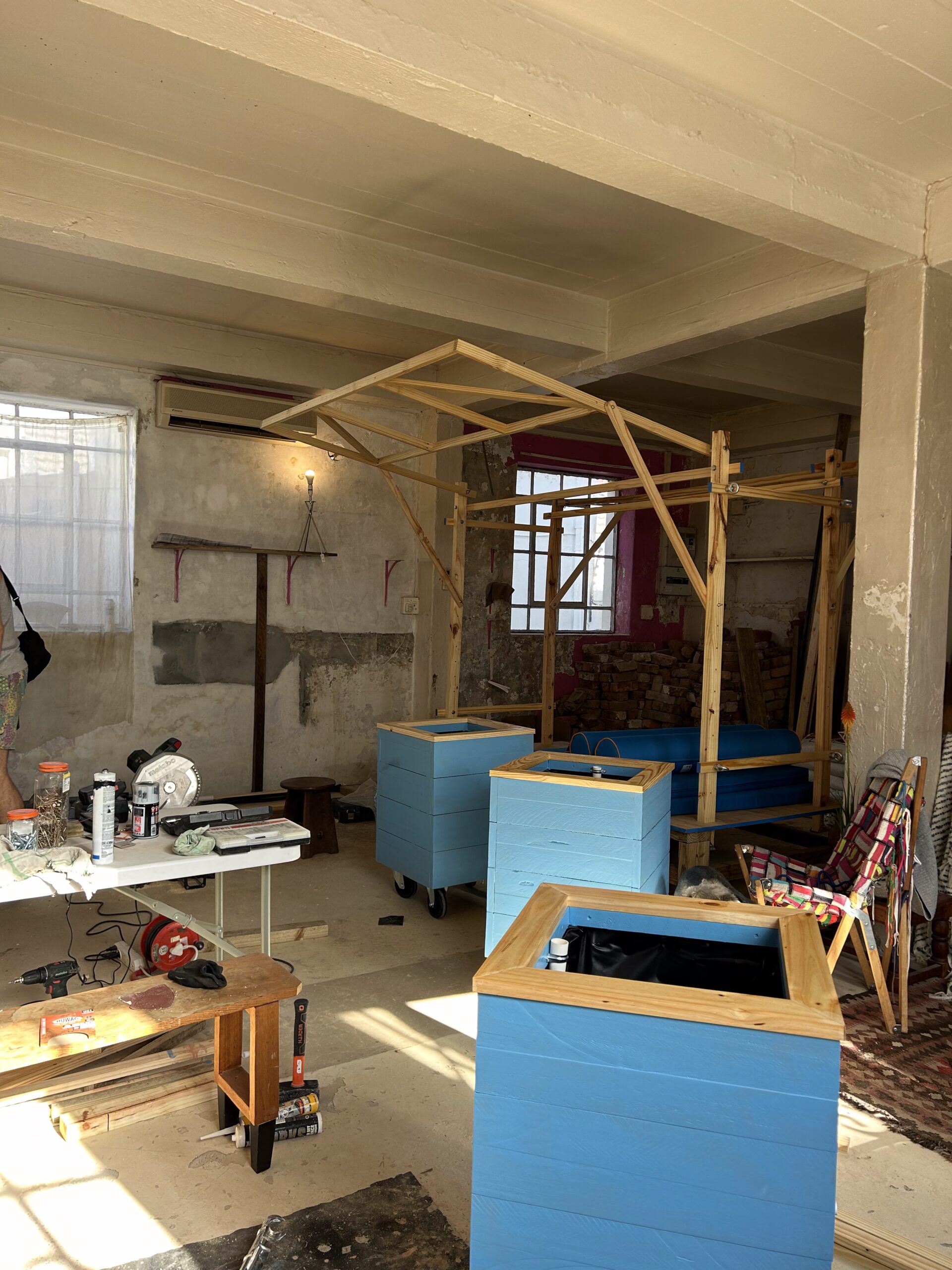
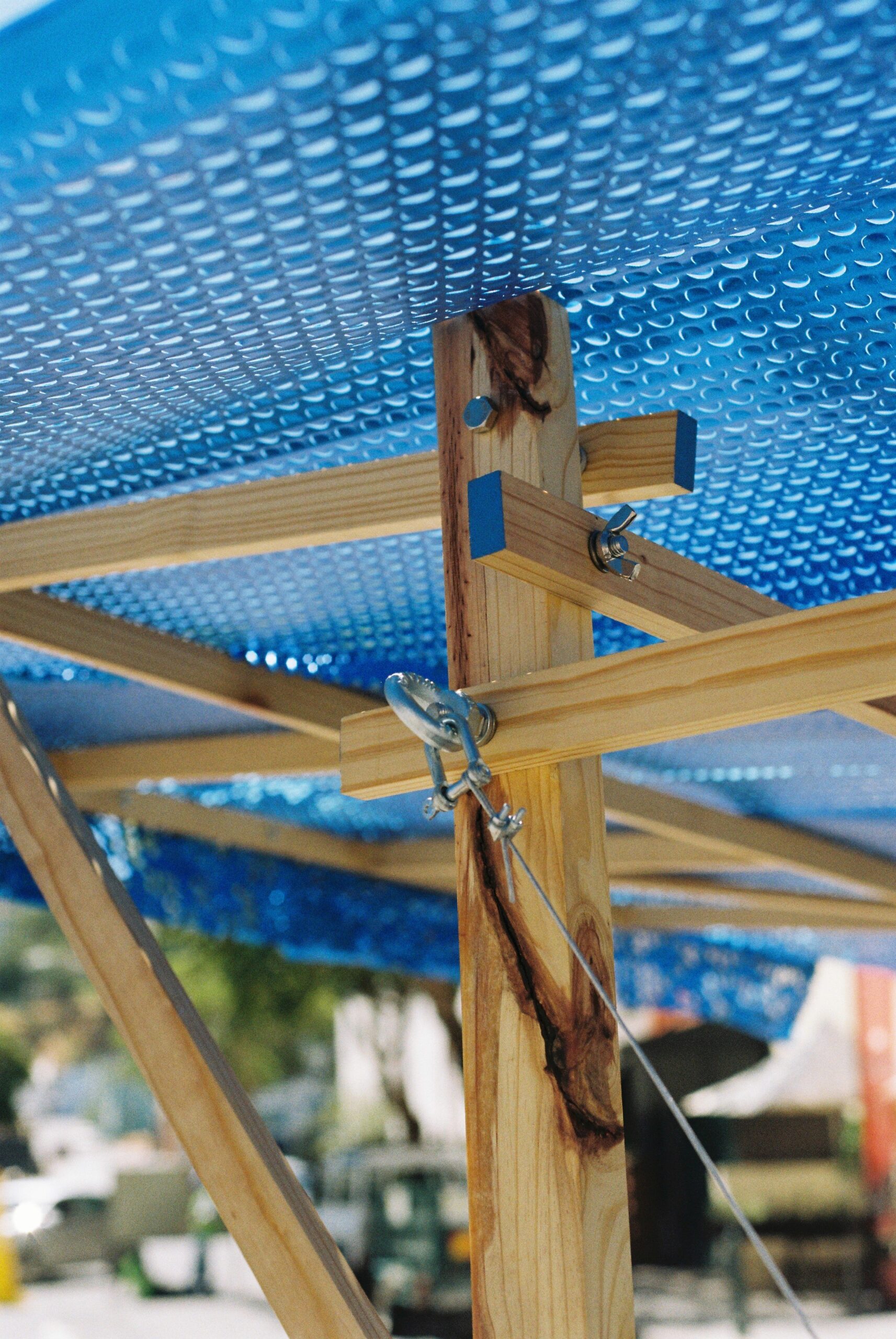
The main frame is built from SA pine, both treated and untreated, planed and unplaned, with painted edges introducing colour and a sense of playfulness. Stainless steel bolts, nuts, and washers allow the structure to be assembled and potentially disassembled when needed.
Custom foam cushions and bolsters provide seating, upholstered in blue twill fabric. While visually successful, the fabric proved less suitable for outdoor use than anticipated, highlighting the importance of durability when designing for public environments.
The canopy is made from a perforated, slightly reflective fabric with a small amount of stretch. Although less durable than conventional shade cloth, its reflective quality gives the structure a lighter and more playful character. Three separate fabric panels span the canopy frame, allowing wind loads to dissipate and helping stabilise the structure.
Large pneumatic castor wheels make the lounger mobile within the street. Once completed, moving it from one end of Bree Street to the other often became part of the spectacle, occasionally with people climbing aboard and being ferried across the open roadway.
shade, even in the street
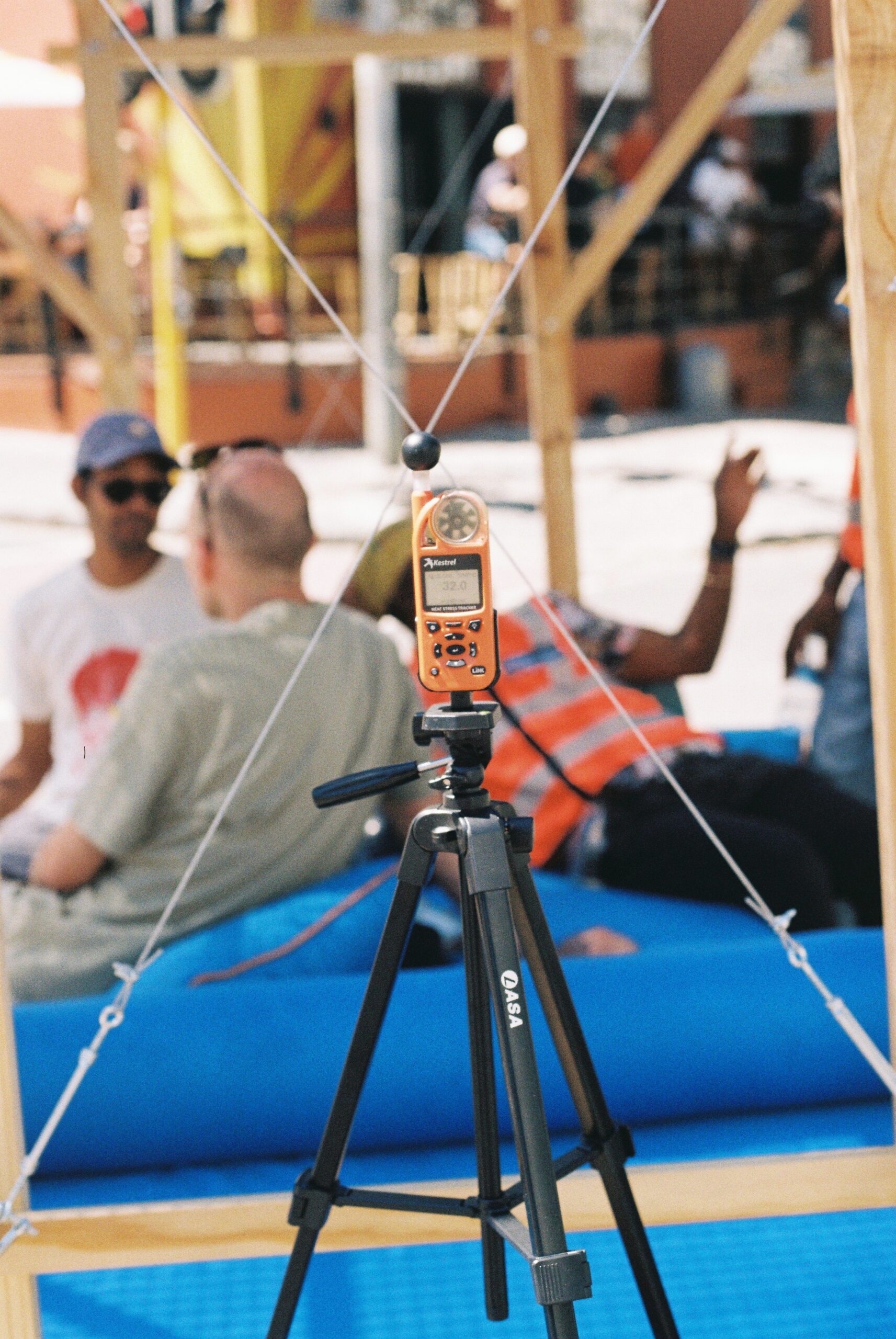
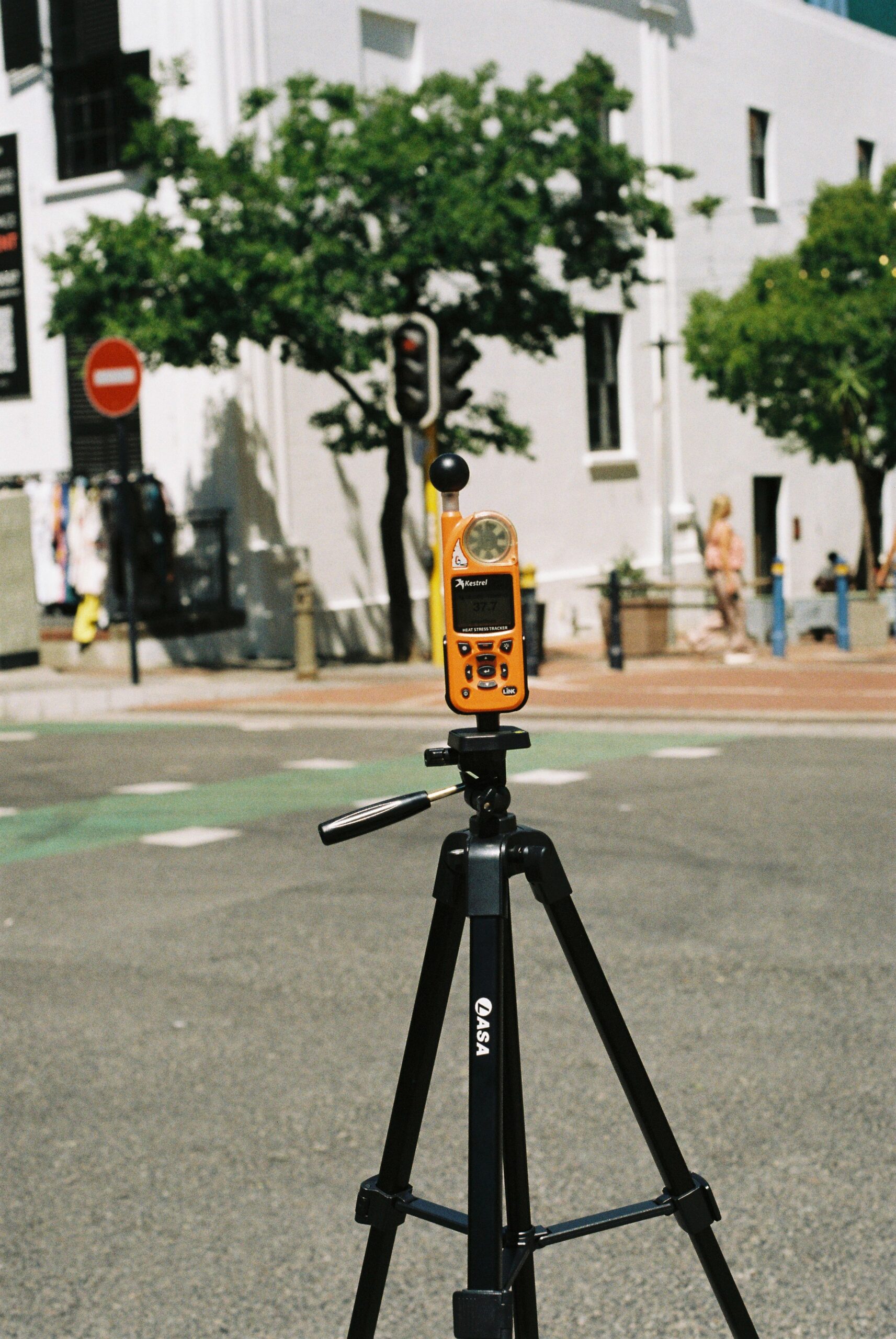
Alongside the installation we conducted a small set of environmental measurements to understand how effectively the canopy improved comfort on the street.
Using globe thermometers integrated in Kestrel 5400 meters, we recorded globe temperatures in three conditions: direct sun, beneath the lounger canopy, and under nearby tree shade. Measurements were taken repeatedly during the course of the event.
The difference was immediately noticeable. The shaded lounger consistently produced globe temperatures roughly 10°C lower than the surrounding sun-exposed street, with differences reaching up to about 15°C on the hottest afternoon. At that time the street surface registered roughly 45°C in direct sun, compared to approximately 32°C beneath the canopy.
In practical terms this meant something simple but important: instead of retreating indoors or seeking the narrow strips of shade along buildings, people could comfortably remain in the street. The lounger created a small pocket of usable shade where previously there had been none.
learnings
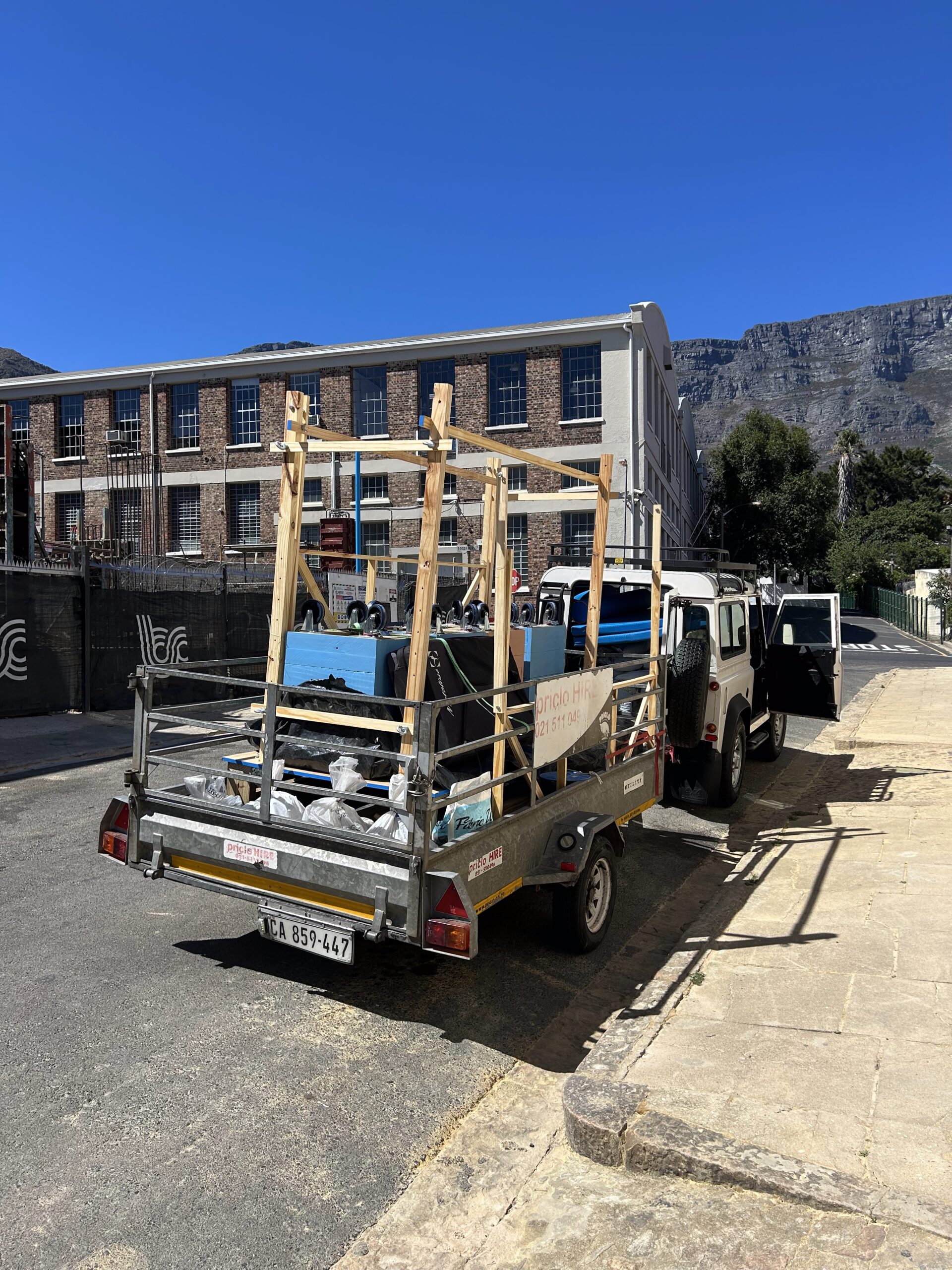
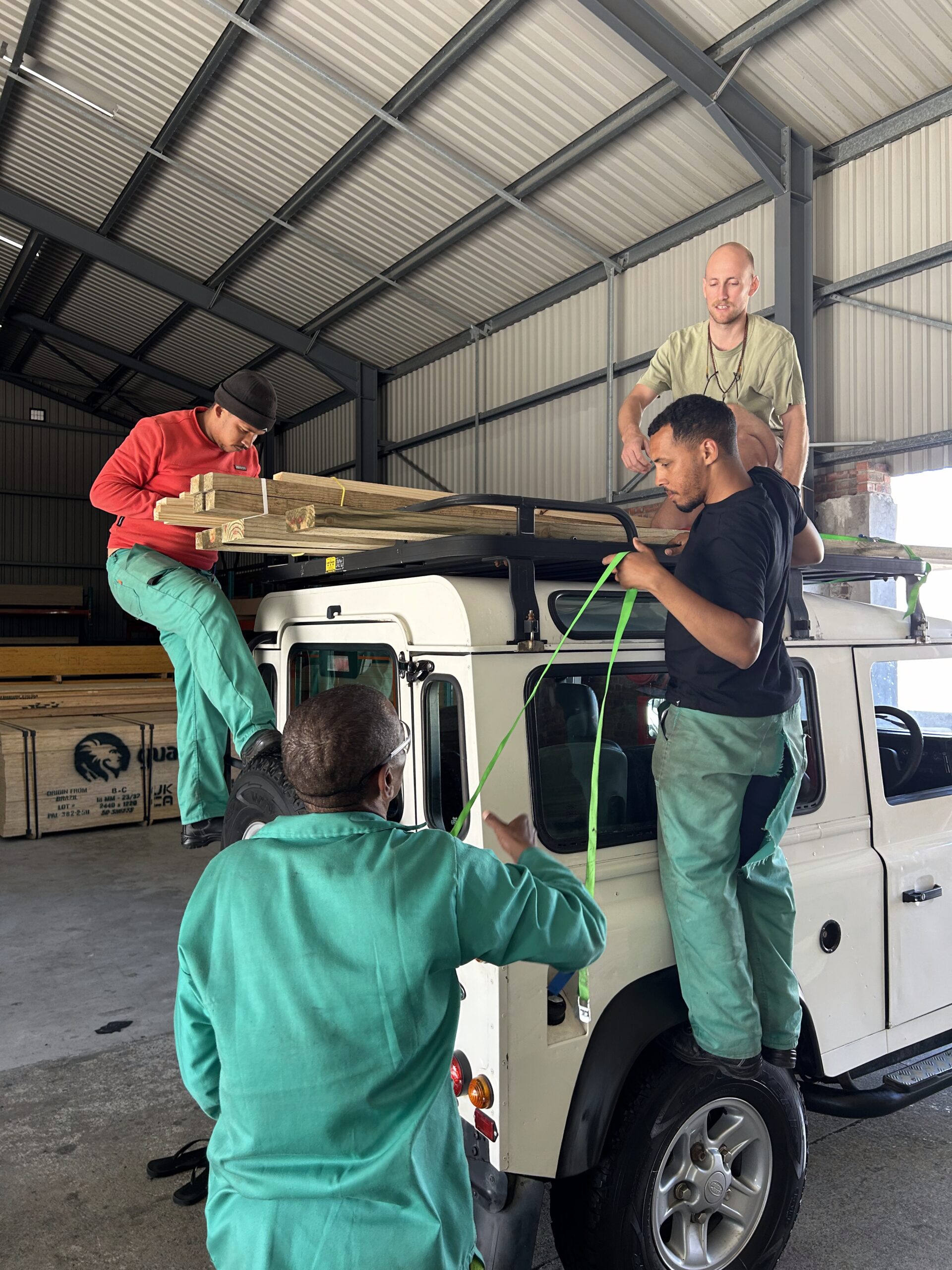
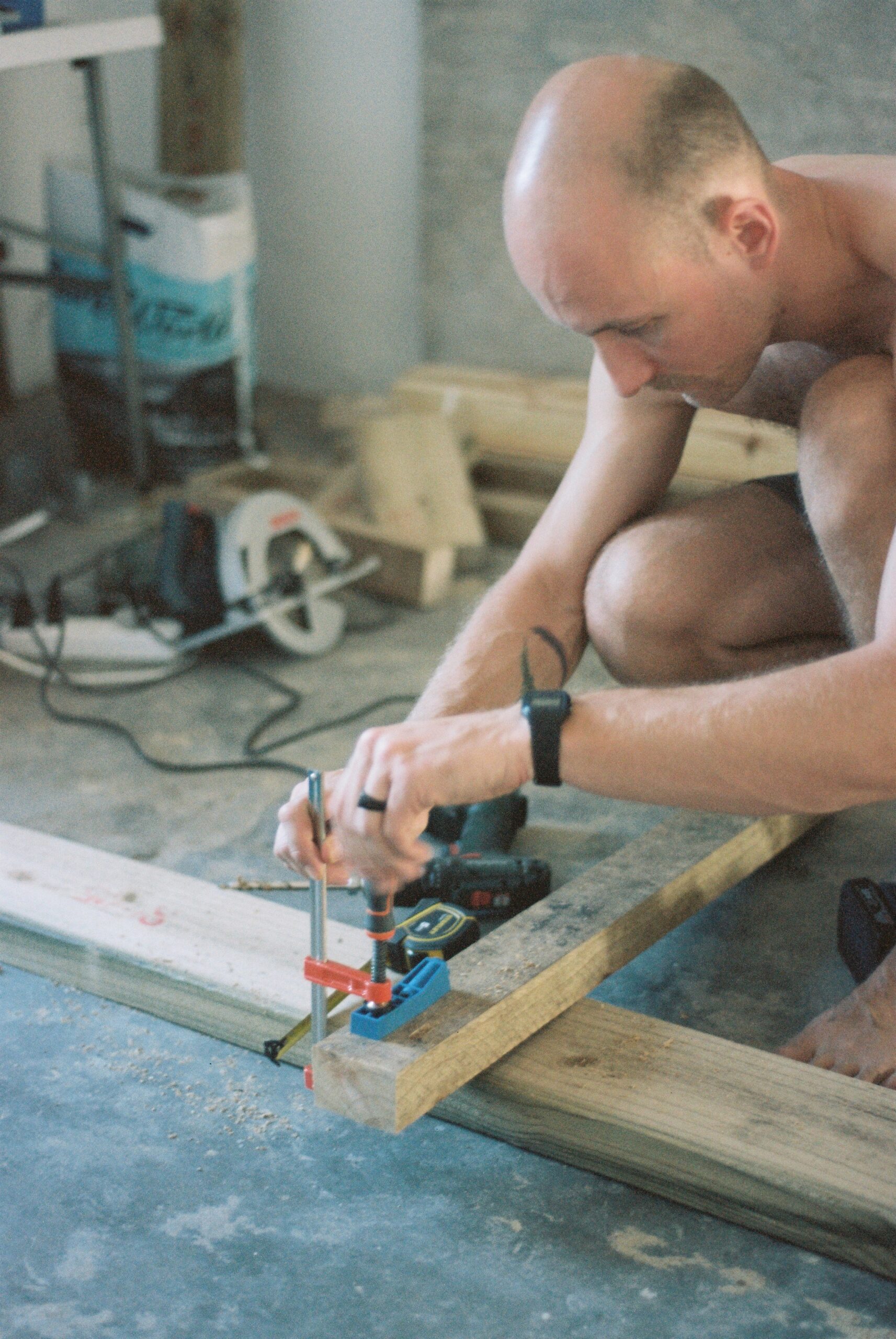
As our first large-scale design-and-build project, the lounger involved a number of practical challenges. The structure had to remain fully self-supporting because nothing could be anchored into the street surface, and it needed to be transported to and from the event between weekends. Construction also unfolded across improvised workspaces, first in Margaux’s father’s garage and later in our studio, which proved large enough to build the structure but not large enough to easily move it through the doors.
These constraints revealed lessons that now inform our work: the importance of understanding scale early in the design process, the value of good tools and workspace, and the need for clarity with clients about expectations and scope. As a first build together, the project became an intensive learning experience that shaped how we approach future projects.
what next?
The Bree Street Lounger should be understood as a prototype rather than a finished product.
The underlying structure was designed as a modular system that could be adapted into different configurations depending on the needs of a street, event, or client. Early ideas included not only loungers but also variations such as shaded picnic tables, market stalls, and other forms of temporary street furniture built from the same basic framework.
Future versions will likely become smaller, lighter, and easier to deploy. We are already exploring units designed for two or three people, creating smaller pockets of shade while retaining the mobility and adaptability of the original structure.
Rather than a single large object, a family of movable shade elements could form a distributed network of shaded spaces along a street.
As cities warm and public spaces become increasingly exposed, temporary shade infrastructure offers a flexible way to improve comfort without permanent construction. For us, this project marks the beginning of a broader exploration into how temporary structures, shade, and public life might come together to make cities more generous places to inhabit.